
Never Miss an Update
Subscribe to PepTalk and get the latest FDA updates, research highlights, and industry news delivered straight to your inbox.
Never Miss an Update
Subscribe to PepTalk and get the latest FDA updates, research highlights, and industry news delivered straight to your inbox.
Never Miss an Update
REGULATORY
•
What Is GHK-Cu? The Copper Peptide for Skin, Hair & Healthy Aging
What Is GHK-Cu? The Copper Peptide for Skin, Hair & Healthy Aging
GHK-Cu is a naturally occurring copper peptide being studied for skin, hair and tissue repair. Here's what the science actually shows.
GHK-Cu is a naturally occurring copper peptide being studied for skin, hair and tissue repair. Here's what the science actually shows.

By PepMed Editorial Team
By PepMed Editorial Team
PepMed Updates
PepMed Updates


Important Takeaway
GHK-Cu has attracted interest for skin health, hair growth and tissue repair, but evidence varies significantly by use and injectable GHK-Cu remains an area of FDA safety and regulatory review.
GHK-Cu has attracted interest for skin health, hair growth and tissue repair, but evidence varies significantly by use and injectable GHK-Cu remains an area of FDA safety and regulatory review.
GHK-Cu has attracted interest for skin health, hair growth and tissue repair, but evidence varies significantly by use and injectable GHK-Cu remains an area of FDA safety and regulatory review.
If you've spent any time looking into skincare, hair growth or peptides recently, you may have come across GHK-Cu.
Often called the copper peptide, GHK-Cu has become increasingly popular in skincare products and peptide discussions because of research into its potential role in skin remodeling, tissue repair and hair biology.
But—as with many peptides—the level of evidence depends heavily on what it's being used for and how it's administered.
Here's what we currently know.
What Is GHK-Cu?
GHK-Cu stands for glycyl-L-histidyl-L-lysine copper.
GHK is a naturally occurring tripeptide made from just three amino acids:
Glycine + Histidine + Lysine
The peptide can bind copper ions, creating the copper complex known as GHK-Cu.
GHK was originally identified in human plasma and is also found in other biological fluids. Researchers have investigated its involvement in processes associated with tissue remodeling, wound healing and cellular signaling.
That's quite different from many of the synthetic peptides discussed online: GHK itself occurs naturally in the human body.
Why Is GHK-Cu Used in Skincare?
This is probably where most people encounter it.
Copper peptides are incorporated into a variety of cosmetic products marketed for aging skin, texture and appearance.
Research has investigated GHK-Cu's effects on processes involving collagen, elastin, fibroblasts and tissue remodeling.
That's why you'll frequently see copper peptides associated with:
Skin firmness → elasticity → fine lines → tissue repair → healthy-looking skin
But it's important to distinguish a biological mechanism or promising study from proof that every GHK-Cu product produces those outcomes.
Concentration, formulation and delivery can all matter.
Can GHK-Cu Help With Hair Growth?
Hair is another major reason GHK-Cu has become popular.
Researchers have explored copper peptides in relation to hair follicle biology, and GHK-Cu is increasingly promoted online as a hair-growth peptide.
There is scientific rationale for studying this area, but the evidence should not be confused with the much larger clinical evidence base supporting established treatments for certain forms of hair loss.
In other words:
Interesting research doesn't automatically mean proven hair-loss treatment.
That's an important distinction when evaluating the claims surrounding GHK-Cu.
Is GHK-Cu the Same as Copper in a Supplement?
No.
GHK-Cu is a copper-peptide complex. It isn't simply the same thing as consuming copper through food or taking a dietary copper supplement.
The peptide binds copper and may influence how copper participates in biological signaling and cellular processes.
Taking additional dietary copper therefore shouldn't be considered an equivalent way of obtaining the effects being investigated with GHK-Cu.
What About GHK-Cu Injections?
This is where the conversation changes considerably.
Topical copper peptides and injectable GHK-Cu should not be treated as though they're the same thing.
FDA has specifically identified potential concerns with compounded injectable GHK-Cu, including the possibility of immunogenicity related to aggregation and peptide-related impurities. FDA also says human data informing the safety of injectable GHK-Cu are limited.
That makes claims suggesting injectable GHK-Cu is an established anti-aging or regenerative treatment particularly important to scrutinize.
Is GHK-Cu FDA Approved?
GHK-Cu should not be confused with an FDA-approved drug for skin rejuvenation, hair growth or anti-aging.
There's also an interesting regulatory development underway.
Previous nominations involving GHK-Cu for the 503A Bulks List were withdrawn. However, FDA announced that it intends to consult its Pharmacy Compounding Advisory Committee before the end of February 2027 regarding the potential inclusion of GHK-Cu on the 503A Bulks List.
That review could be important for the future regulatory landscape surrounding compounded GHK-Cu.
Importantly, an upcoming advisory committee review doesn't mean GHK-Cu has been approved or that FDA has already decided it should be used in compounded medications.
Why Has GHK-Cu Become So Popular?
GHK-Cu sits at the intersection of several rapidly growing areas:
Peptides + skincare + hair health + longevity + regenerative medicine
That's almost a perfect recipe for social-media attention.
And unlike some experimental peptides, GHK-Cu has a history of biological research behind it.
The problem occurs when promising biological research gets transformed into claims of guaranteed hair regrowth, younger skin, accelerated healing or anti-aging effects that extend beyond what clinical evidence has established.
The Takeaway
GHK-Cu is a naturally occurring copper-binding peptide with interesting research surrounding skin biology, tissue remodeling and hair follicles.
Its growing popularity has made it one of the more recognizable peptides outside the GLP-1 world.
But the evidence isn't equally strong for every proposed use—and the route of administration matters.
Topical copper-peptide skincare shouldn't automatically be treated as equivalent to injectable GHK-Cu, and FDA has specifically raised safety considerations about compounded injectable formulations while the regulatory status of GHK-Cu continues to be evaluated.
As peptide research continues to evolve, GHK-Cu is certainly one worth watching.
Medical Disclaimer: This content is provided for educational and informational purposes only and does not constitute medical advice, diagnosis, or treatment. Reading this content does not establish a provider-patient relationship with PepMed. Always consult a qualified healthcare professional regarding your individual health and treatment decisions. [Read our full Medical Disclaimer]
Medical Disclaimer: This content is provided for educational and informational purposes only and does not constitute medical advice, diagnosis, or treatment. Reading this content does not establish a provider-patient relationship with PepMed. Always consult a qualified healthcare professional regarding your individual health and treatment decisions. [Read our full Medical Disclaimer]

Access. Trust. Convenience.
A new era of Physician guided care.
_________
PepMed connects you with licensed physicians and personalized care - anytime, anywhere.




COMING SOON
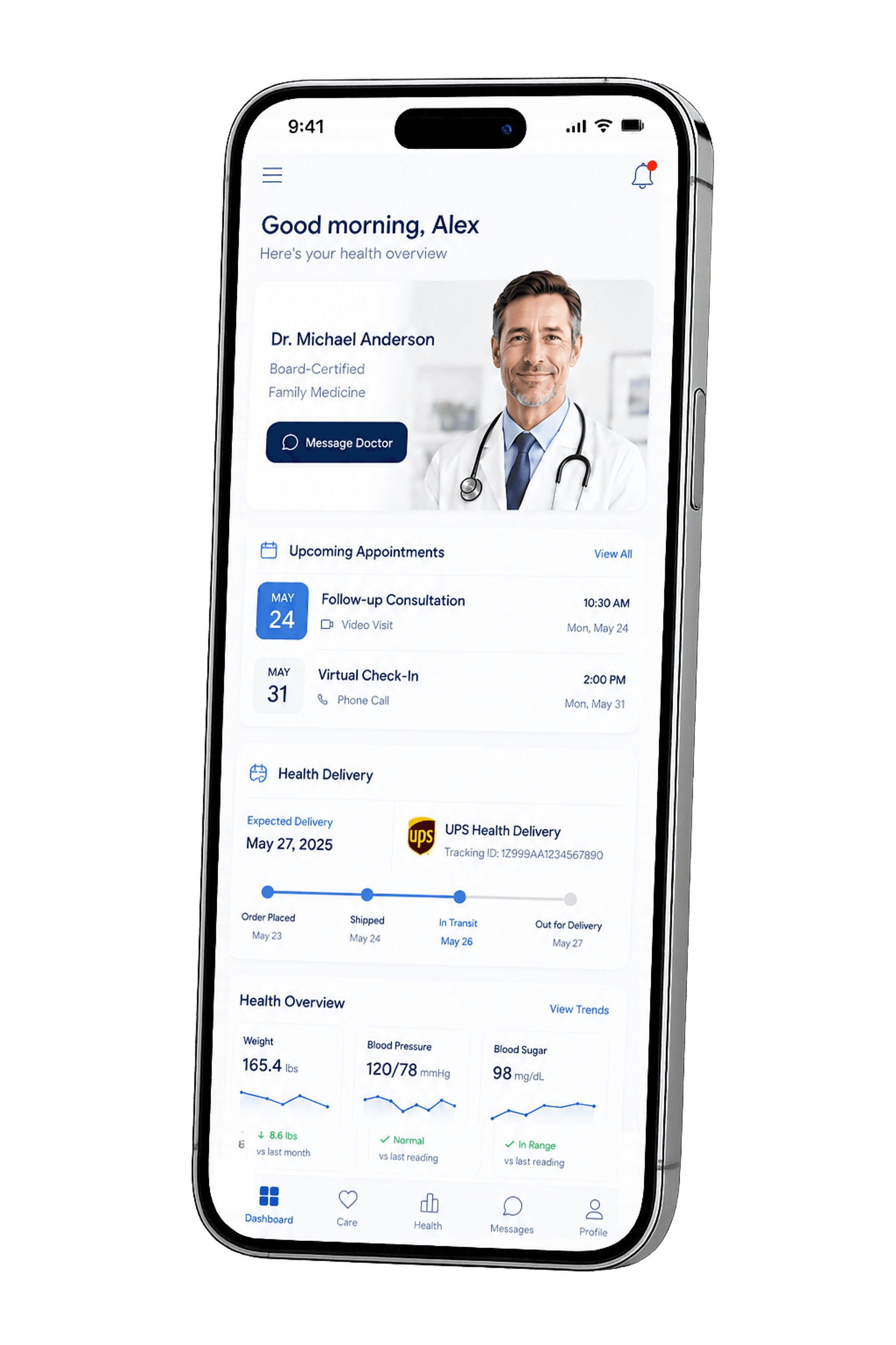
The PepMed mobile app.
Access consultations, health insights and more - all from your phone.


Stay tuned for launch updates.
PepTalk Updates
New articles, platform news and launch announcements


Virtual Care
Connect with licensed providers from wherever you are.

Treatment Access
Treatment options prescribed by licensed healthcare providers.

See Your Progress
Appointments, delivery tracking and health trends in one place.
© 2026 PepMed. All rights reserved
Access. Trust. Convenience.
A new era of Physician guided care.
_________
PepMed connects you with licensed physicians and personalized care - anytime, anywhere.
COMING SOON
The PepMed mobile app.
Access consultations, health insights and more - all from your phone.
PepTalk Updates
New articles, platform news and launch announcements
Virtual Care
Connect with licensed providers from wherever you are.
Treatment Access
Treatment options prescribed by licensed healthcare providers.
See Your Progress
Appointments, delivery tracking and health trends in one place.
© 2026 PepMed. All rights reserved