
Never Miss an Update
Subscribe to PepTalk and get the latest FDA updates, research highlights, and industry news delivered straight to your inbox.
Never Miss an Update
Subscribe to PepTalk and get the latest FDA updates, research highlights, and industry news delivered straight to your inbox.
Never Miss an Update
PepMed
•
What Are Peptides? How They Work, Benefits & What to Know
What Are Peptides? How They Work, Benefits & What to Know
Peptides are short chains of amino acids that help regulate important functions throughout the body. Learn what they are, how they work, and why they matter.
Peptides are short chains of amino acids that help regulate important functions throughout the body. Learn what they are, how they work, and why they matter.

By PepMed Editorial Team
By PepMed Editorial Team
PepMed Updates
PepMed Updates


Important Takeaway
Peptides are natural biological messengers involved in everything from metabolism and hormones to tissue repair. Some are established medications, while others remain experimental and require much more research.
Peptides are natural biological messengers involved in everything from metabolism and hormones to tissue repair. Some are established medications, while others remain experimental and require much more research.
Peptides are natural biological messengers involved in everything from metabolism and hormones to tissue repair. Some are established medications, while others remain experimental and require much more research.
If you've heard the word peptides more often lately, you're not alone.
Peptides have become one of the most talked-about areas of modern wellness and medicine. They appear in conversations about weight loss, metabolic health, recovery, muscle growth, skin health, hormones, healthy aging, and longevity.
Some peptides are established medications backed by decades of research. Others are emerging therapies being studied for entirely new applications.
But before considering what peptides might do, there's a much more fundamental question:
What are peptides?
The simple answer is that peptides are short chains of amino acids—the same building blocks your body uses to make proteins.
The more interesting answer is that these relatively small molecules can act as powerful biological messengers, helping cells communicate and influencing important processes throughout the body.
What Are Peptides?
Peptides are short chains of amino acids linked together by chemical bonds called peptide bonds.
Amino acids are often described as the building blocks of proteins.
Think of amino acids like letters.
A few letters arranged in a particular sequence can create a word. Change the order of the letters and you can create an entirely different word with a different meaning.
Peptides work similarly.
Different combinations and sequences of amino acids create different peptides—and those peptides can perform very different functions in the body.
Generally speaking:
Amino acids → Peptides → Proteins
Peptides contain shorter chains of amino acids, while proteins generally consist of longer, more complex chains.
But don't mistake "smaller" for "less important."
Many peptides act as signaling molecules that help tell cells and tissues what to do and when to do it. They participate in processes involving hormones, metabolism, immune function, digestion, tissue repair, growth and inflammation.
What Do Peptides Do in the Body?
Your body naturally produces many different peptides.
Rather than performing one universal function, different peptides carry different biological messages.
Depending on the peptide, those signals may be involved in:
Hormone signaling
Metabolism
Blood sugar regulation
Appetite and satiety
Digestion
Immune function
Inflammation
Tissue growth and repair
Reproductive function
Skin and connective tissue
Energy regulation
In other words, "peptide" describes a type of molecule—not one specific treatment or effect.
That's an important distinction.
Asking "What do peptides do?" is a little like asking "What do hormones do?"
There isn't one answer because different molecules have completely different roles.
Peptides vs. Proteins: What's the Difference?
Peptides and proteins are closely related because both are made from amino acids.
The primary difference is their size and complexity.
Peptides generally contain shorter chains of amino acids. Proteins contain longer chains that fold into more complicated three-dimensional structures.
One easy way to think about it is:
Peptides are short messages. Proteins are larger biological machines.
The boundary isn't perfectly defined, but the distinction helps explain why peptides can be useful as signaling molecules.
Their relatively small structures allow certain peptides to interact very specifically with receptors throughout the body.
Are Peptides Naturally Found in the Human Body?
Yes.
Peptides are a normal part of human biology.
Your body is producing and using peptides right now.
One familiar example is insulin, a peptide hormone produced by the pancreas that plays a central role in regulating blood glucose.
There are many others.
Some peptides participate in appetite signaling. Others influence reproductive hormones, blood pressure, immune responses, digestion or tissue growth.
Scientists can also create peptide molecules in laboratories.
That ability has opened an enormous field of pharmaceutical research.
Researchers can study naturally occurring peptides, modify their structures, or develop molecules that mimic particular biological signals.
That's where peptide medications enter the picture.
What Is Peptide Therapy?
The phrase peptide therapy is commonly used to describe the use of peptide-based compounds to influence a particular biological pathway.
However, the term covers an extremely broad spectrum.
Some peptide therapies are FDA-approved prescription medications supported by extensive clinical research.
Others remain investigational.
And some products promoted online as "peptides" have limited or insufficient human safety and effectiveness data.
That distinction matters.
A substance being a peptide does not automatically mean that it is safe, effective or approved for medical use.
The evidence needs to be evaluated peptide by peptide.
What Are Some Examples of Peptide Medications?
You may already be familiar with peptide-based medicine without realizing it.
Insulin is one of the best-known examples.
Modern metabolic medicine provides another.
Several medications that interact with the GLP-1 pathway are peptide-based drugs. GLP-1-related therapies have become important treatments for conditions including type 2 diabetes and obesity.
Other peptide-based medications have been developed for hormonal, reproductive and other medical applications.
And research continues.
Scientists are investigating peptide-based therapies across numerous areas of medicine, which is one reason peptides have received so much attention in recent years.
Why Are Peptides Becoming So Popular?
Peptides aren't new.
Our understanding of how to use them therapeutically is what's changing.
Advances in biotechnology have made it increasingly possible for researchers to identify biological pathways and design molecules that interact with them very precisely.
At the same time, the enormous popularity of GLP-1 medications has introduced millions of people to the idea that targeting specific biological signals can significantly influence metabolism and appetite.
Peptides have consequently moved from a relatively technical area of biochemistry into mainstream conversations about wellness.
Today, people encounter discussions about peptides in connection with:
Weight management
Certain peptide-based medications can influence pathways involved in appetite, satiety and metabolic health.
Recovery
Researchers are studying biological pathways involved in tissue repair, inflammation and recovery.
Hormones
Some peptide medications influence hormonal signaling or stimulate the release of particular hormones.
Skin and hair
Peptides are widely used in cosmetic and dermatologic products, particularly in products marketed for skin appearance and collagen-related support.
Performance and body composition
Some peptide pathways influence metabolism, growth and body composition, although many products promoted for these purposes remain experimental.
Longevity
Peptides are increasingly discussed within longevity research, although enthusiasm frequently runs ahead of high-quality human clinical evidence.
That last point is particularly important.
Are Peptides the Same as GLP-1s?
Not exactly.
GLP-1 is a peptide hormone, but peptides represent a much larger category of molecules.
GLP-1 stands for glucagon-like peptide-1.
It is naturally produced in the body and participates in appetite and blood-glucose regulation.
Medications such as semaglutide mimic GLP-1 activity, while newer therapies may interact with multiple metabolic pathways.
So while GLP-1 medications are part of the peptide story, peptides extend far beyond GLP-1s and weight management.
How Are Peptides Taken?
There isn't one universal way to take a peptide.
The appropriate route depends entirely on the specific molecule and product.
Peptide-related products can exist as:
Injectable medications
Oral medications or supplements
Nasal formulations
Topical products
Cosmetic products
One challenge with many peptides is that the digestive system can break them down.
Remember: peptides are chains of amino acids.
Your digestive system is specifically designed to break proteins and peptides into smaller components.
This is one reason many peptide medications have traditionally been administered by injection rather than swallowed.
Pharmaceutical researchers are actively developing new delivery technologies intended to overcome these limitations.
What Are the Potential Benefits of Peptides?
There is no universal list of "peptide benefits."
Benefits depend entirely on which peptide we're discussing.
For an FDA-approved peptide medication, the benefits should be evaluated based on the clinical evidence for that particular drug and indication.
For an investigational peptide, researchers may have preliminary evidence suggesting a potential biological effect—but preliminary evidence is not the same as proven clinical benefit.
This distinction is especially important because social media often groups dozens of unrelated compounds under the single label "peptides."
The scientific question shouldn't simply be:
"Do peptides work?"
It should be:
"What does the evidence show for this specific peptide, for this specific purpose, in humans?"
That's a much better question.
Are Peptides Safe?
Again, it depends on the peptide.
Some peptide-based medications have undergone extensive clinical testing and FDA review.
Other peptides are still being investigated.
Some have very limited human data.
And some products sold online as "research peptides" may introduce additional concerns regarding identity, purity, sterility, potency and manufacturing quality.
The FDA has specifically identified safety concerns or insufficient safety information for a number of substances marketed within the peptide space.
This is why patients should be skeptical of claims suggesting that something is inherently safe simply because it is a peptide or because a similar molecule occurs naturally in the body.
Natural does not automatically mean risk-free.
The molecule, dose, route of administration, medical history, other medications, manufacturing quality and clinical evidence all matter.
What About Compounded Peptides?
You may also encounter the term compounded peptide.
Drug compounding involves preparing a medication for a patient's specific medical needs under applicable federal and state requirements.
Compounded medications can serve an important role when a patient's needs cannot be met by an FDA-approved product—for example, when a patient requires a formulation without a particular ingredient.
However, there is an important regulatory distinction:
Compounded drugs are not FDA-approved drugs.
The FDA does not review compounded medications for safety, effectiveness or quality before they are marketed in the same way it reviews FDA-approved drugs.
That doesn't mean all compounding is inherently inappropriate.
It means patients should understand what they're receiving, why it's being compounded, where it's coming from, and what evidence exists for the underlying therapy.
Are Peptides Steroids?
No.
Peptides and anabolic steroids are different types of molecules.
Peptides are made from chains of amino acids.
Steroid hormones are lipid-derived molecules with a characteristic chemical structure.
Some peptides and steroids may influence overlapping biological systems, which can create confusion in fitness and performance conversations, but chemically and biologically they are not the same thing.
Are Peptides Supplements?
Some peptide-containing products are sold as supplements, but not all peptides are supplements.
This is another reason the terminology can become confusing.
Depending on the specific substance and intended use, you may encounter peptides as prescription medications, investigational compounds, compounded preparations, dietary products or cosmetic ingredients.
Those categories are regulated differently and can have dramatically different levels of supporting evidence.
Are Peptides Legal?
There isn't a single yes-or-no answer because "peptides" describes thousands of different molecules.
Some peptide-based drugs are FDA approved and available by prescription.
Some are being studied in clinical trials.
Some may be used in lawful compounding only under specific circumstances.
Others are not approved for human use.
The regulatory status therefore needs to be evaluated for the specific peptide, not peptides as an entire category.
The Difference Between Promising and Proven
Perhaps the most important thing to understand about the current peptide landscape is the difference between biological plausibility and demonstrated clinical benefit.
A peptide may interact with an interesting pathway.
Animal studies may produce encouraging results.
Early research may identify a potential therapeutic application.
None of those things automatically establish that the peptide is safe and effective in humans.
Moving from an interesting molecule to an established medical treatment requires research.
That typically includes progressively larger clinical trials designed to evaluate questions such as:
Does it work?
What dose works?
What are the side effects?
Who should—or shouldn't—receive it?
How does it interact with other medications?
Are there longer-term risks?
This process is essential to separating promising science from hype.
The Future of Peptide Medicine
Peptides offer researchers something particularly powerful: the ability to target specific biological pathways.
That makes them an exciting area of modern medicine.
The enormous impact of peptide-based metabolic medications has already demonstrated what can happen when researchers successfully translate biological signaling into effective treatment.
But we're still relatively early in understanding the therapeutic potential of many other peptides.
Over the coming years, some investigational peptides may accumulate convincing clinical evidence and become established treatments.
Others may fail to demonstrate meaningful benefits or reveal unacceptable risks.
That's how medical science progresses.
So, What Are Peptides?
At their simplest:
Peptides are short chains of amino acids that can act as biological messengers throughout the body.
They're naturally involved in processes ranging from metabolism and hormone signaling to immune function and tissue repair.
They also represent an increasingly important area of medicine.
But "peptide" is a scientific category—not a guarantee of effectiveness or safety.
Some peptide therapies are established medicines. Some are promising areas of research. Others remain experimental with significant unanswered questions.
Understanding those differences is the first step toward understanding the rapidly evolving world of peptide medicine.
At PepMed, our goal is to help make that distinction clearer—following the science, explaining emerging research in plain language, and helping patients better understand the changing landscape of wellness and metabolic medicine.
If you've heard the word peptides more often lately, you're not alone.
Peptides have become one of the most talked-about areas of modern wellness and medicine. They appear in conversations about weight loss, metabolic health, recovery, muscle growth, skin health, hormones, healthy aging, and longevity.
Some peptides are established medications backed by decades of research. Others are emerging therapies being studied for entirely new applications.
But before considering what peptides might do, there's a much more fundamental question:
What are peptides?
The simple answer is that peptides are short chains of amino acids—the same building blocks your body uses to make proteins.
The more interesting answer is that these relatively small molecules can act as powerful biological messengers, helping cells communicate and influencing important processes throughout the body.
What Are Peptides?
Peptides are short chains of amino acids linked together by chemical bonds called peptide bonds.
Amino acids are often described as the building blocks of proteins.
Think of amino acids like letters.
A few letters arranged in a particular sequence can create a word. Change the order of the letters and you can create an entirely different word with a different meaning.
Peptides work similarly.
Different combinations and sequences of amino acids create different peptides—and those peptides can perform very different functions in the body.
Generally speaking:
Amino acids → Peptides → Proteins
Peptides contain shorter chains of amino acids, while proteins generally consist of longer, more complex chains.
But don't mistake "smaller" for "less important."
Many peptides act as signaling molecules that help tell cells and tissues what to do and when to do it. They participate in processes involving hormones, metabolism, immune function, digestion, tissue repair, growth and inflammation.
What Do Peptides Do in the Body?
Your body naturally produces many different peptides.
Rather than performing one universal function, different peptides carry different biological messages.
Depending on the peptide, those signals may be involved in:
Hormone signaling
Metabolism
Blood sugar regulation
Appetite and satiety
Digestion
Immune function
Inflammation
Tissue growth and repair
Reproductive function
Skin and connective tissue
Energy regulation
In other words, "peptide" describes a type of molecule—not one specific treatment or effect.
That's an important distinction.
Asking "What do peptides do?" is a little like asking "What do hormones do?"
There isn't one answer because different molecules have completely different roles.
Peptides vs. Proteins: What's the Difference?
Peptides and proteins are closely related because both are made from amino acids.
The primary difference is their size and complexity.
Peptides generally contain shorter chains of amino acids. Proteins contain longer chains that fold into more complicated three-dimensional structures.
One easy way to think about it is:
Peptides are short messages. Proteins are larger biological machines.
The boundary isn't perfectly defined, but the distinction helps explain why peptides can be useful as signaling molecules.
Their relatively small structures allow certain peptides to interact very specifically with receptors throughout the body.
Are Peptides Naturally Found in the Human Body?
Yes.
Peptides are a normal part of human biology.
Your body is producing and using peptides right now.
One familiar example is insulin, a peptide hormone produced by the pancreas that plays a central role in regulating blood glucose.
There are many others.
Some peptides participate in appetite signaling. Others influence reproductive hormones, blood pressure, immune responses, digestion or tissue growth.
Scientists can also create peptide molecules in laboratories.
That ability has opened an enormous field of pharmaceutical research.
Researchers can study naturally occurring peptides, modify their structures, or develop molecules that mimic particular biological signals.
That's where peptide medications enter the picture.
What Is Peptide Therapy?
The phrase peptide therapy is commonly used to describe the use of peptide-based compounds to influence a particular biological pathway.
However, the term covers an extremely broad spectrum.
Some peptide therapies are FDA-approved prescription medications supported by extensive clinical research.
Others remain investigational.
And some products promoted online as "peptides" have limited or insufficient human safety and effectiveness data.
That distinction matters.
A substance being a peptide does not automatically mean that it is safe, effective or approved for medical use.
The evidence needs to be evaluated peptide by peptide.
What Are Some Examples of Peptide Medications?
You may already be familiar with peptide-based medicine without realizing it.
Insulin is one of the best-known examples.
Modern metabolic medicine provides another.
Several medications that interact with the GLP-1 pathway are peptide-based drugs. GLP-1-related therapies have become important treatments for conditions including type 2 diabetes and obesity.
Other peptide-based medications have been developed for hormonal, reproductive and other medical applications.
And research continues.
Scientists are investigating peptide-based therapies across numerous areas of medicine, which is one reason peptides have received so much attention in recent years.
Why Are Peptides Becoming So Popular?
Peptides aren't new.
Our understanding of how to use them therapeutically is what's changing.
Advances in biotechnology have made it increasingly possible for researchers to identify biological pathways and design molecules that interact with them very precisely.
At the same time, the enormous popularity of GLP-1 medications has introduced millions of people to the idea that targeting specific biological signals can significantly influence metabolism and appetite.
Peptides have consequently moved from a relatively technical area of biochemistry into mainstream conversations about wellness.
Today, people encounter discussions about peptides in connection with:
Weight management
Certain peptide-based medications can influence pathways involved in appetite, satiety and metabolic health.
Recovery
Researchers are studying biological pathways involved in tissue repair, inflammation and recovery.
Hormones
Some peptide medications influence hormonal signaling or stimulate the release of particular hormones.
Skin and hair
Peptides are widely used in cosmetic and dermatologic products, particularly in products marketed for skin appearance and collagen-related support.
Performance and body composition
Some peptide pathways influence metabolism, growth and body composition, although many products promoted for these purposes remain experimental.
Longevity
Peptides are increasingly discussed within longevity research, although enthusiasm frequently runs ahead of high-quality human clinical evidence.
That last point is particularly important.
Are Peptides the Same as GLP-1s?
Not exactly.
GLP-1 is a peptide hormone, but peptides represent a much larger category of molecules.
GLP-1 stands for glucagon-like peptide-1.
It is naturally produced in the body and participates in appetite and blood-glucose regulation.
Medications such as semaglutide mimic GLP-1 activity, while newer therapies may interact with multiple metabolic pathways.
So while GLP-1 medications are part of the peptide story, peptides extend far beyond GLP-1s and weight management.
How Are Peptides Taken?
There isn't one universal way to take a peptide.
The appropriate route depends entirely on the specific molecule and product.
Peptide-related products can exist as:
Injectable medications
Oral medications or supplements
Nasal formulations
Topical products
Cosmetic products
One challenge with many peptides is that the digestive system can break them down.
Remember: peptides are chains of amino acids.
Your digestive system is specifically designed to break proteins and peptides into smaller components.
This is one reason many peptide medications have traditionally been administered by injection rather than swallowed.
Pharmaceutical researchers are actively developing new delivery technologies intended to overcome these limitations.
What Are the Potential Benefits of Peptides?
There is no universal list of "peptide benefits."
Benefits depend entirely on which peptide we're discussing.
For an FDA-approved peptide medication, the benefits should be evaluated based on the clinical evidence for that particular drug and indication.
For an investigational peptide, researchers may have preliminary evidence suggesting a potential biological effect—but preliminary evidence is not the same as proven clinical benefit.
This distinction is especially important because social media often groups dozens of unrelated compounds under the single label "peptides."
The scientific question shouldn't simply be:
"Do peptides work?"
It should be:
"What does the evidence show for this specific peptide, for this specific purpose, in humans?"
That's a much better question.
Are Peptides Safe?
Again, it depends on the peptide.
Some peptide-based medications have undergone extensive clinical testing and FDA review.
Other peptides are still being investigated.
Some have very limited human data.
And some products sold online as "research peptides" may introduce additional concerns regarding identity, purity, sterility, potency and manufacturing quality.
The FDA has specifically identified safety concerns or insufficient safety information for a number of substances marketed within the peptide space.
This is why patients should be skeptical of claims suggesting that something is inherently safe simply because it is a peptide or because a similar molecule occurs naturally in the body.
Natural does not automatically mean risk-free.
The molecule, dose, route of administration, medical history, other medications, manufacturing quality and clinical evidence all matter.
What About Compounded Peptides?
You may also encounter the term compounded peptide.
Drug compounding involves preparing a medication for a patient's specific medical needs under applicable federal and state requirements.
Compounded medications can serve an important role when a patient's needs cannot be met by an FDA-approved product—for example, when a patient requires a formulation without a particular ingredient.
However, there is an important regulatory distinction:
Compounded drugs are not FDA-approved drugs.
The FDA does not review compounded medications for safety, effectiveness or quality before they are marketed in the same way it reviews FDA-approved drugs.
That doesn't mean all compounding is inherently inappropriate.
It means patients should understand what they're receiving, why it's being compounded, where it's coming from, and what evidence exists for the underlying therapy.
Are Peptides Steroids?
No.
Peptides and anabolic steroids are different types of molecules.
Peptides are made from chains of amino acids.
Steroid hormones are lipid-derived molecules with a characteristic chemical structure.
Some peptides and steroids may influence overlapping biological systems, which can create confusion in fitness and performance conversations, but chemically and biologically they are not the same thing.
Are Peptides Supplements?
Some peptide-containing products are sold as supplements, but not all peptides are supplements.
This is another reason the terminology can become confusing.
Depending on the specific substance and intended use, you may encounter peptides as prescription medications, investigational compounds, compounded preparations, dietary products or cosmetic ingredients.
Those categories are regulated differently and can have dramatically different levels of supporting evidence.
Are Peptides Legal?
There isn't a single yes-or-no answer because "peptides" describes thousands of different molecules.
Some peptide-based drugs are FDA approved and available by prescription.
Some are being studied in clinical trials.
Some may be used in lawful compounding only under specific circumstances.
Others are not approved for human use.
The regulatory status therefore needs to be evaluated for the specific peptide, not peptides as an entire category.
The Difference Between Promising and Proven
Perhaps the most important thing to understand about the current peptide landscape is the difference between biological plausibility and demonstrated clinical benefit.
A peptide may interact with an interesting pathway.
Animal studies may produce encouraging results.
Early research may identify a potential therapeutic application.
None of those things automatically establish that the peptide is safe and effective in humans.
Moving from an interesting molecule to an established medical treatment requires research.
That typically includes progressively larger clinical trials designed to evaluate questions such as:
Does it work?
What dose works?
What are the side effects?
Who should—or shouldn't—receive it?
How does it interact with other medications?
Are there longer-term risks?
This process is essential to separating promising science from hype.
The Future of Peptide Medicine
Peptides offer researchers something particularly powerful: the ability to target specific biological pathways.
That makes them an exciting area of modern medicine.
The enormous impact of peptide-based metabolic medications has already demonstrated what can happen when researchers successfully translate biological signaling into effective treatment.
But we're still relatively early in understanding the therapeutic potential of many other peptides.
Over the coming years, some investigational peptides may accumulate convincing clinical evidence and become established treatments.
Others may fail to demonstrate meaningful benefits or reveal unacceptable risks.
That's how medical science progresses.
So, What Are Peptides?
At their simplest:
Peptides are short chains of amino acids that can act as biological messengers throughout the body.
They're naturally involved in processes ranging from metabolism and hormone signaling to immune function and tissue repair.
They also represent an increasingly important area of medicine.
But "peptide" is a scientific category—not a guarantee of effectiveness or safety.
Some peptide therapies are established medicines. Some are promising areas of research. Others remain experimental with significant unanswered questions.
Understanding those differences is the first step toward understanding the rapidly evolving world of peptide medicine.
At PepMed, our goal is to help make that distinction clearer—following the science, explaining emerging research in plain language, and helping patients better understand the changing landscape of wellness and metabolic medicine.
Medical Disclaimer: This content is provided for educational and informational purposes only and does not constitute medical advice, diagnosis, or treatment. Reading this content does not establish a provider-patient relationship with PepMed. Always consult a qualified healthcare professional regarding your individual health and treatment decisions. [Read our full Medical Disclaimer]
Medical Disclaimer: This content is provided for educational and informational purposes only and does not constitute medical advice, diagnosis, or treatment. Reading this content does not establish a provider-patient relationship with PepMed. Always consult a qualified healthcare professional regarding your individual health and treatment decisions. [Read our full Medical Disclaimer]

Access. Trust. Convenience.
A new era of Physician guided care.
_________
PepMed connects you with licensed physicians and personalized care - anytime, anywhere.




COMING SOON
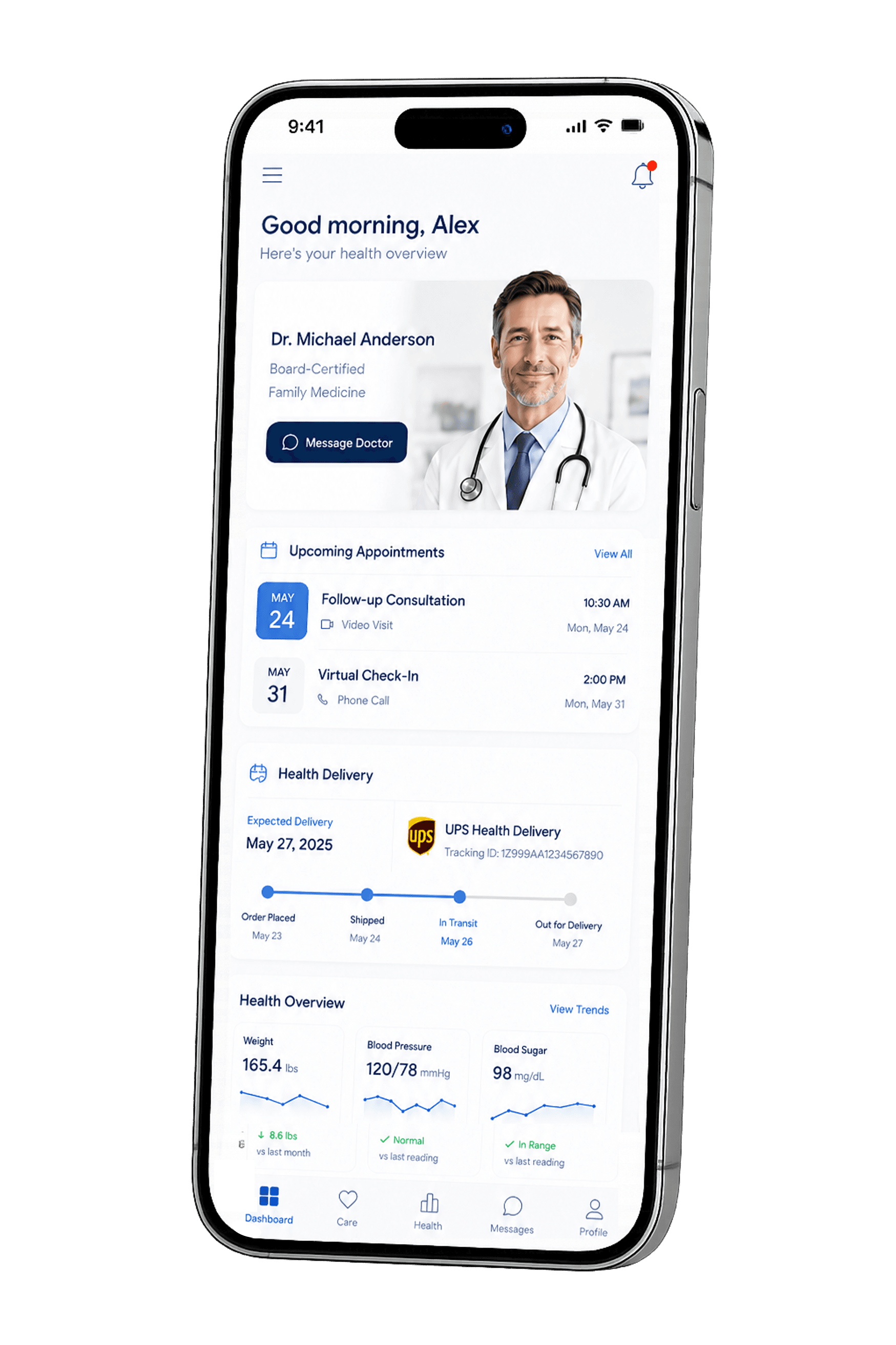
The PepMed mobile app.
Access consultations, health insights and more - all from your phone.


Stay tuned for launch updates.
PepTalk Updates
New articles, platform news and launch announcements


Virtual Care
Connect with licensed providers from wherever you are.

Treatment Access
Treatment options prescribed by licensed healthcare providers.

See Your Progress
Appointments, delivery tracking and health trends in one place.
© 2026 PepMed. All rights reserved
Access. Trust. Convenience.
A new era of Physician guided care.
_________
PepMed connects you with licensed physicians and personalized care - anytime, anywhere.
COMING SOON
The PepMed mobile app.
Access consultations, health insights and more - all from your phone.
PepTalk Updates
New articles, platform news and launch announcements
Virtual Care
Connect with licensed providers from wherever you are.
Treatment Access
Treatment options prescribed by licensed healthcare providers.
See Your Progress
Appointments, delivery tracking and health trends in one place.
© 2026 PepMed. All rights reserved
Access. Trust. Convenience.
A new era of Physician guided care.
_________
PepMed connects you with licensed physicians and personalized care - anytime, anywhere.
COMING SOON
The PepMed mobile app.
Access consultations, health insights and more - all from your phone.
PepTalk Updates
New articles, platform news and launch announcements
Virtual Care
Connect with licensed providers from wherever you are.
Treatment Access
Treatment options prescribed by licensed healthcare providers.
See Your Progress
Appointments, delivery tracking and health trends in one place.
© 2026 PepMed. All rights reserved