
Never Miss an Update
Subscribe to PepTalk and get the latest FDA updates, research highlights, and industry news delivered straight to your inbox.
Never Miss an Update
Subscribe to PepTalk and get the latest FDA updates, research highlights, and industry news delivered straight to your inbox.
Never Miss an Update
PRODUCT DEVELOPMENT
•
The Next Generation of Peptide Development
The Next Generation of Peptide Development
Peptide medicine is rapidly advancing as new therapies, stronger quality standards, and evolving regulation shape its future.
Peptide medicine is rapidly advancing as new therapies, stronger quality standards, and evolving regulation shape its future.

By PepMed Editorial Team
By PepMed Editorial Team
PepMed Updates
PepMed Updates


Important Takeaway
The future of peptide medicine isn’t just about developing new therapies—it’s about creating safer, more transparent, and better-regulated pathways for patients to access them.
The future of peptide medicine isn’t just about developing new therapies—it’s about creating safer, more transparent, and better-regulated pathways for patients to access them.
The future of peptide medicine isn’t just about developing new therapies—it’s about creating safer, more transparent, and better-regulated pathways for patients to access them.
The peptide industry is entering a new phase.
What was once a niche area of research is becoming an increasingly important area of modern medicine, with pharmaceutical companies, researchers, and healthcare professionals investing heavily in the future of peptide-based therapies.
From metabolic health and weight management to emerging areas of recovery and regenerative medicine, peptide research and development continues to accelerate.
One of the clearest examples of this progress has been the evolution of GLP-1 therapies. Earlier GLP-1 medications generally had shorter durations of action and required more frequent dosing. Today, newer therapies have been engineered to remain active in the body longer and produce more sustained effects on pathways involved in appetite, insulin secretion, and glucose regulation.
Researchers are also developing dual- and triple-pathway therapies designed to target multiple hormonal receptors simultaneously, potentially expanding the metabolic effects achievable with a single treatment.
At the same time, increasing FDA attention surrounding peptide compounding could help shape how certain peptide therapies are accessed and regulated in the future.
Major Companies Are Investing Heavily
Some of the world’s largest pharmaceutical companies are investing heavily in peptide and metabolic therapies.
Companies such as Eli Lilly and Novo Nordisk have helped push peptide medicine into the global spotlight through GLP-1 therapies and the development of next-generation metabolic treatments.
Advances in GLP-1 medications have significantly changed metabolic treatment. Modern therapies can provide prolonged receptor activity and more sustained therapeutic effects, allowing some medications to be administered weekly rather than daily.
These advances have contributed to more consistent appetite regulation, improved glycemic control, and significant weight-loss outcomes for many patients.
Meanwhile, newer therapies currently in development are exploring:
multi-pathway peptide therapies
longer-lasting delivery systems
oral peptide formulations
precision metabolic medicine
emerging recovery and regenerative applications
The broader healthcare industry is clearly moving deeper into peptide science.
Why Quality Matters More Than Ever
As interest in peptides has grown, so has the availability of peptide products sold outside traditional healthcare and pharmacy channels.
Regulators have raised concerns about unapproved and unregulated products marketed online, particularly when their identity, strength, purity, sterility, or manufacturing conditions cannot be reliably verified.
Potential concerns can include:
inaccurate dosing or potency
contamination
inadequate sterility
inconsistent manufacturing
misleading or incomplete labeling
These issues can create significant safety concerns for consumers.
Whenever peptide therapies can legally be prescribed and compounded, obtaining them through appropriately licensed healthcare providers and pharmacies provides important safeguards that are generally absent when purchasing products from unverified online sources.
How Compounding Standards Can Improve Quality
Licensed 503A compounding pharmacies operate within a regulated pharmacy framework and are subject to applicable federal requirements as well as state pharmacy laws and oversight.
Depending on the medication, pharmacy, and applicable requirements, quality-control practices may include:
controlled compounding environments
appropriate ingredient sourcing
potency or identity testing
sterility testing for applicable sterile preparations
contamination and endotoxin testing where appropriate
temperature-controlled storage and fulfillment
Analytical methods used within pharmaceutical and compounding quality systems can include techniques such as:
High-Performance Liquid Chromatography (HPLC)
mass spectrometry
potency testing
sterility testing
The specific testing and quality-control procedures used can vary by pharmacy, preparation, and regulatory requirements.
These safeguards are intended to support greater consistency, quality, dosing accuracy, and patient safety.
Importantly, compounded medications are not FDA-approved. The FDA does not review compounded drugs for safety, effectiveness, or manufacturing quality before they are marketed in the same manner it does FDA-approved medications.
This distinction makes appropriate prescribing, pharmacy selection, and patient monitoring especially important.
Why the FDA Shift Matters
In July 2026, the FDA's Pharmacy Compounding Advisory Committee reviewed several peptide-related bulk drug substances for potential inclusion on the 503A Bulks List.
The substances considered included BPC-157, KPV, TB-500, MOTS-C, DSIP/emideltide, Semax, and Epitalon.
This review represents an important development for the peptide industry, but consideration by the committee does not mean these substances have been FDA-approved or authorized for routine 503A compounding.
The advisory committee evaluates available evidence and provides recommendations. The FDA ultimately determines whether substances are added to the 503A Bulks List through the applicable regulatory process.
If certain peptide substances eventually become eligible for compounding under appropriate legal pathways, regulated access could potentially provide:
greater healthcare-provider oversight
pharmacy quality standards
more transparent sourcing
stronger patient-safety protections
reduced reliance on unverified online sources
For the peptide industry, the development of clearer regulatory pathways could become increasingly important as scientific interest and consumer demand continue to grow.
Building Toward a Safer Future
At PepMed, we believe the future of peptide medicine must be built around:
quality
transparency
patient safety
responsible access
healthcare-provider oversight
trusted pharmacy partnerships
As the industry evolves, our focus remains on helping patients navigate peptide therapies responsibly and confidently.
The science is advancing quickly.
From the evolution of GLP-1 technology to the development of next-generation therapies targeting multiple metabolic pathways, peptide medicine is becoming increasingly sophisticated.
Now, the infrastructure, regulation, and quality standards surrounding these therapies must continue evolving alongside the science.
The peptide industry is entering a new phase.
What was once a niche area of research is becoming an increasingly important area of modern medicine, with pharmaceutical companies, researchers, and healthcare professionals investing heavily in the future of peptide-based therapies.
From metabolic health and weight management to emerging areas of recovery and regenerative medicine, peptide research and development continues to accelerate.
One of the clearest examples of this progress has been the evolution of GLP-1 therapies. Earlier GLP-1 medications generally had shorter durations of action and required more frequent dosing. Today, newer therapies have been engineered to remain active in the body longer and produce more sustained effects on pathways involved in appetite, insulin secretion, and glucose regulation.
Researchers are also developing dual- and triple-pathway therapies designed to target multiple hormonal receptors simultaneously, potentially expanding the metabolic effects achievable with a single treatment.
At the same time, increasing FDA attention surrounding peptide compounding could help shape how certain peptide therapies are accessed and regulated in the future.
Major Companies Are Investing Heavily
Some of the world’s largest pharmaceutical companies are investing heavily in peptide and metabolic therapies.
Companies such as Eli Lilly and Novo Nordisk have helped push peptide medicine into the global spotlight through GLP-1 therapies and the development of next-generation metabolic treatments.
Advances in GLP-1 medications have significantly changed metabolic treatment. Modern therapies can provide prolonged receptor activity and more sustained therapeutic effects, allowing some medications to be administered weekly rather than daily.
These advances have contributed to more consistent appetite regulation, improved glycemic control, and significant weight-loss outcomes for many patients.
Meanwhile, newer therapies currently in development are exploring:
multi-pathway peptide therapies
longer-lasting delivery systems
oral peptide formulations
precision metabolic medicine
emerging recovery and regenerative applications
The broader healthcare industry is clearly moving deeper into peptide science.
Why Quality Matters More Than Ever
As interest in peptides has grown, so has the availability of peptide products sold outside traditional healthcare and pharmacy channels.
Regulators have raised concerns about unapproved and unregulated products marketed online, particularly when their identity, strength, purity, sterility, or manufacturing conditions cannot be reliably verified.
Potential concerns can include:
inaccurate dosing or potency
contamination
inadequate sterility
inconsistent manufacturing
misleading or incomplete labeling
These issues can create significant safety concerns for consumers.
Whenever peptide therapies can legally be prescribed and compounded, obtaining them through appropriately licensed healthcare providers and pharmacies provides important safeguards that are generally absent when purchasing products from unverified online sources.
How Compounding Standards Can Improve Quality
Licensed 503A compounding pharmacies operate within a regulated pharmacy framework and are subject to applicable federal requirements as well as state pharmacy laws and oversight.
Depending on the medication, pharmacy, and applicable requirements, quality-control practices may include:
controlled compounding environments
appropriate ingredient sourcing
potency or identity testing
sterility testing for applicable sterile preparations
contamination and endotoxin testing where appropriate
temperature-controlled storage and fulfillment
Analytical methods used within pharmaceutical and compounding quality systems can include techniques such as:
High-Performance Liquid Chromatography (HPLC)
mass spectrometry
potency testing
sterility testing
The specific testing and quality-control procedures used can vary by pharmacy, preparation, and regulatory requirements.
These safeguards are intended to support greater consistency, quality, dosing accuracy, and patient safety.
Importantly, compounded medications are not FDA-approved. The FDA does not review compounded drugs for safety, effectiveness, or manufacturing quality before they are marketed in the same manner it does FDA-approved medications.
This distinction makes appropriate prescribing, pharmacy selection, and patient monitoring especially important.
Why the FDA Shift Matters
In July 2026, the FDA's Pharmacy Compounding Advisory Committee reviewed several peptide-related bulk drug substances for potential inclusion on the 503A Bulks List.
The substances considered included BPC-157, KPV, TB-500, MOTS-C, DSIP/emideltide, Semax, and Epitalon.
This review represents an important development for the peptide industry, but consideration by the committee does not mean these substances have been FDA-approved or authorized for routine 503A compounding.
The advisory committee evaluates available evidence and provides recommendations. The FDA ultimately determines whether substances are added to the 503A Bulks List through the applicable regulatory process.
If certain peptide substances eventually become eligible for compounding under appropriate legal pathways, regulated access could potentially provide:
greater healthcare-provider oversight
pharmacy quality standards
more transparent sourcing
stronger patient-safety protections
reduced reliance on unverified online sources
For the peptide industry, the development of clearer regulatory pathways could become increasingly important as scientific interest and consumer demand continue to grow.
Building Toward a Safer Future
At PepMed, we believe the future of peptide medicine must be built around:
quality
transparency
patient safety
responsible access
healthcare-provider oversight
trusted pharmacy partnerships
As the industry evolves, our focus remains on helping patients navigate peptide therapies responsibly and confidently.
The science is advancing quickly.
From the evolution of GLP-1 technology to the development of next-generation therapies targeting multiple metabolic pathways, peptide medicine is becoming increasingly sophisticated.
Now, the infrastructure, regulation, and quality standards surrounding these therapies must continue evolving alongside the science.
Medical Disclaimer: This content is provided for educational and informational purposes only and does not constitute medical advice, diagnosis, or treatment. Reading this content does not establish a provider-patient relationship with PepMed. Always consult a qualified healthcare professional regarding your individual health and treatment decisions. [Read our full Medical Disclaimer]
Medical Disclaimer: This content is provided for educational and informational purposes only and does not constitute medical advice, diagnosis, or treatment. Reading this content does not establish a provider-patient relationship with PepMed. Always consult a qualified healthcare professional regarding your individual health and treatment decisions. [Read our full Medical Disclaimer]

Access. Trust. Convenience.
A new era of Physician guided care.
_________
PepMed connects you with licensed physicians and personalized care - anytime, anywhere.




COMING SOON
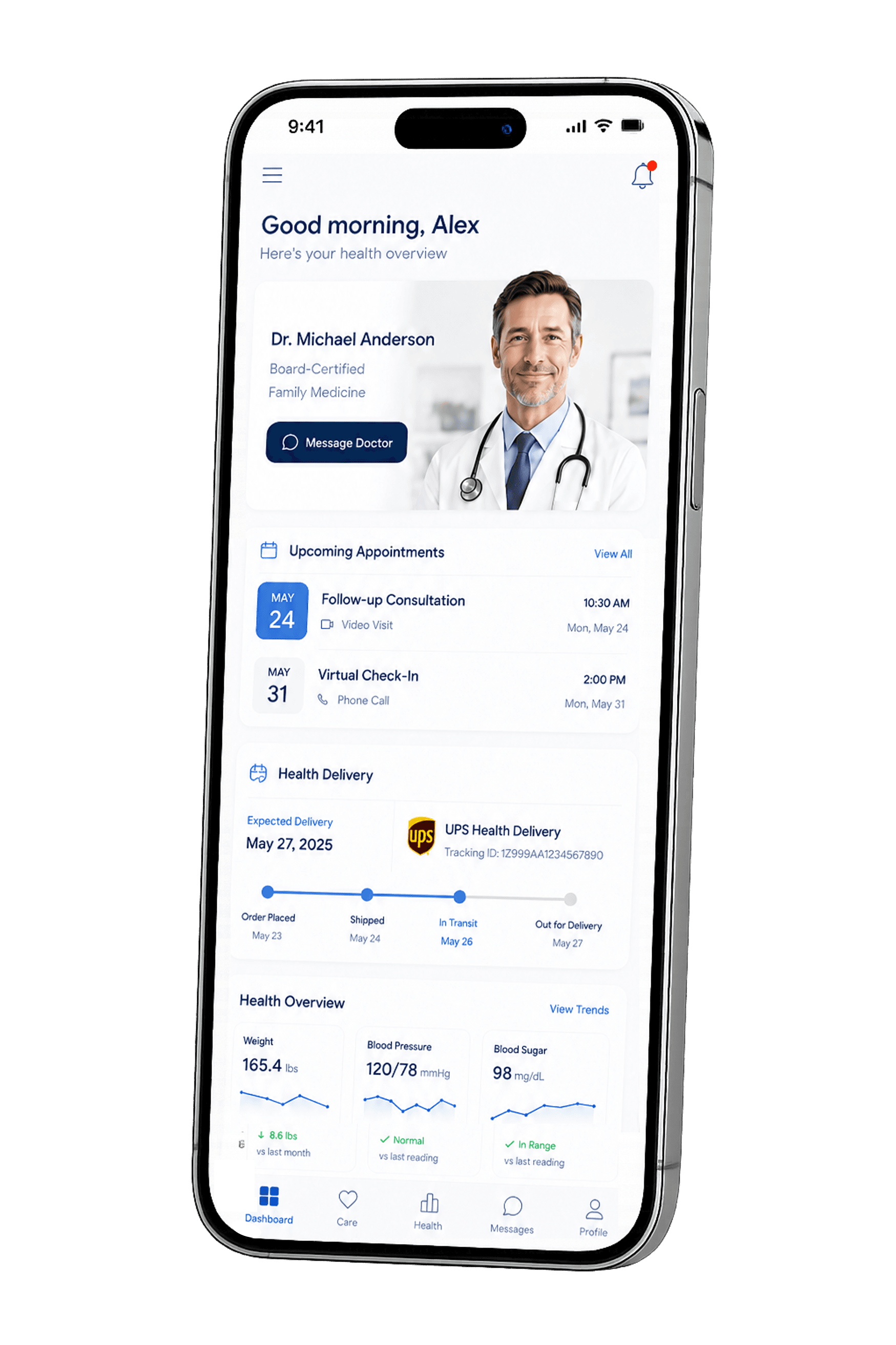
The PepMed mobile app.
Access consultations, health insights and more - all from your phone.


Stay tuned for launch updates.
PepTalk Updates
New articles, platform news and launch announcements


Virtual Care
Connect with licensed providers from wherever you are.

Treatment Access
Treatment options prescribed by licensed healthcare providers.

See Your Progress
Appointments, delivery tracking and health trends in one place.
© 2026 PepMed. All rights reserved
Access. Trust. Convenience.
A new era of Physician guided care.
_________
PepMed connects you with licensed physicians and personalized care - anytime, anywhere.
COMING SOON
The PepMed mobile app.
Access consultations, health insights and more - all from your phone.
PepTalk Updates
New articles, platform news and launch announcements
Virtual Care
Connect with licensed providers from wherever you are.
Treatment Access
Treatment options prescribed by licensed healthcare providers.
See Your Progress
Appointments, delivery tracking and health trends in one place.
© 2026 PepMed. All rights reserved
Access. Trust. Convenience.
A new era of Physician guided care.
_________
PepMed connects you with licensed physicians and personalized care - anytime, anywhere.
COMING SOON
The PepMed mobile app.
Access consultations, health insights and more - all from your phone.
PepTalk Updates
New articles, platform news and launch announcements
Virtual Care
Connect with licensed providers from wherever you are.
Treatment Access
Treatment options prescribed by licensed healthcare providers.
See Your Progress
Appointments, delivery tracking and health trends in one place.
© 2026 PepMed. All rights reserved