
Never Miss an Update
Subscribe to PepTalk and get the latest FDA updates, research highlights, and industry news delivered straight to your inbox.
Never Miss an Update
Subscribe to PepTalk and get the latest FDA updates, research highlights, and industry news delivered straight to your inbox.
Never Miss an Update
RESEARCH
•
Peptides vs Steroids: What's the Difference? for tiktok, insta & facebook
Peptides vs Steroids: What's the Difference? for tiktok, insta & facebook
Peptides and steroids are often compared, but they work differently. Learn the key differences in muscle growth, hormone effects, safety, and FDA approval.
Peptides and steroids are often compared, but they work differently. Learn the key differences in muscle growth, hormone effects, safety, and FDA approval.

By PepMed Editorial Team
By PepMed Editorial Team
PepMed Updates
PepMed Updates


Important Takeaway
Peptides and steroids are chemically different, and neither is automatically safer. The evidence, risks, and medical uses depend on the specific substance.
Peptides and steroids are chemically different, and neither is automatically safer. The evidence, risks, and medical uses depend on the specific substance.
Peptides and steroids are chemically different, and neither is automatically safer. The evidence, risks, and medical uses depend on the specific substance.
Peptides and steroids are frequently mentioned together in conversations about muscle growth, recovery, hormones, and performance. But despite being discussed in similar settings, they are fundamentally different types of substances.
The biggest difference is their chemical structure and how they work in the body. Peptides are chains of amino acids, while steroids have a characteristic four-ring chemical structure. Both categories include naturally occurring substances and prescription medications, but their effects, risks, and medical uses vary considerably.
Understanding these differences can help you separate established medical treatments from experimental products and misleading marketing claims.
What Are Peptides?
Peptides are short chains of amino acids, the building blocks of proteins. Many act as biological messengers, helping regulate processes such as appetite, hormone release, metabolism, and tissue function.
Different peptides have very different effects.
For example, GLP-1 receptor agonists such as semaglutide are peptide-based medications used for certain medical conditions, including chronic weight management. Other peptides, including some promoted for muscle growth or injury recovery, have limited human research and are not FDA-approved treatments.
Being a peptide does not automatically mean a substance is safe, effective, or approved for medical use.
To understand the basics, read our article What Are Peptides?.
What Are Steroids?
Steroids are compounds characterized by a specific four-ring molecular structure. The body naturally produces several steroid hormones, including testosterone, estrogen, and cortisol.
However, the word steroids can refer to different categories of substances.
Anabolic-androgenic steroids are related to testosterone and can influence muscle growth, protein synthesis, and male sexual characteristics. Some have legitimate medical uses, while nonmedical use for physique or performance enhancement carries substantial health risks.
Corticosteroids, such as prednisone, are a different group of steroid medications commonly prescribed to reduce inflammation or suppress immune activity.
These categories should not be confused. Their effects, indications, and risks are not interchangeable.
Peptides vs Steroids: What Are the Key Differences?
Feature | Peptides | Anabolic Steroids |
|---|---|---|
Structure | Chains of amino acids | Four-ring steroid structure |
Primary action | Varies by peptide and receptor | Activate androgen receptors |
Natural examples | Insulin, glucagon, GLP-1 | Testosterone |
Medical uses | Diabetes, weight management, hormone-related conditions | Certain hormone deficiencies and other specific conditions |
Muscle growth | Depends on the peptide; many claims lack strong human evidence | Can increase muscle mass, but carry important risks |
FDA approval | Some approved; others investigational or unapproved | Certain prescription products approved |
The most important distinction is that neither category describes one specific treatment. The evidence must be evaluated for each individual substance.
Do Peptides Build Muscle Like Steroids?
This is one of the biggest areas of confusion.
Anabolic-androgenic steroids can increase muscle protein synthesis and muscle mass through androgen receptor signaling. However, nonmedical use can also cause cardiovascular, hormonal, reproductive, and other serious complications.
Some peptides marketed for muscle growth act on pathways involving growth hormone or related signaling. Examples discussed online include CJC-1295 and ipamorelin.
But influencing growth hormone release is not the same as demonstrating meaningful improvements in muscle size, strength, or athletic performance.
For many of these peptides, high-quality human evidence remains limited. They should not be considered proven alternatives to anabolic steroids.
Resistance training, adequate nutrition, sufficient sleep, and appropriate medical evaluation remain foundational to healthy muscle development.
Are Peptides Safer Than Steroids?
Not necessarily. Safety depends on the specific substance, dosage, medical indication, product quality, and individual health factors.
FDA-approved peptide medications have undergone clinical evaluation for their approved uses. They can still cause side effects and may not be appropriate for everyone.
Investigational or unapproved peptides may present additional concerns, including limited long-term safety data, uncertain dosing, and potential contamination or quality problems when obtained from unregulated sellers.
Anabolic steroids also have significant risks, particularly when used without medical supervision or at doses intended for performance enhancement. Potential complications include:
Changes in cholesterol and cardiovascular health
Suppression of natural testosterone production
Reduced fertility
Acne and other androgen-related effects
Mood changes and, with certain products, liver injury
These risks do not mean every medically prescribed steroid treatment is inappropriate. Rather, the benefits and risks must be considered within the context of a specific diagnosis and treatment plan.
Are Peptides and Steroids FDA-Approved?
Some are, and some are not.
Certain peptide-based medications, including semaglutide and tirzepatide, have FDA-approved indications for chronic weight management under specific brand names and prescribing criteria.
Likewise, FDA-approved testosterone products are available for certain diagnosed medical conditions.
However, many peptides promoted online for recovery, muscle growth, or anti-aging are investigational or unapproved. A product being described as research-grade, pharmaceutical-grade, or natural does not establish that it is safe or FDA-approved for human use.
FDA approval also applies to specific products and indications—not to an entire category of substances.
Is Testosterone Replacement Therapy the Same as Taking Steroids?
Testosterone is an anabolic-androgenic steroid, so testosterone replacement therapy (TRT) does involve a steroid hormone.
However, medically supervised TRT and nonmedical anabolic steroid use are not the same thing.
TRT may be prescribed to appropriately diagnosed patients with testosterone deficiency. Diagnosis generally involves compatible symptoms and consistently low testosterone levels confirmed through appropriate testing.
Treatment requires individualized assessment and monitoring. Testosterone therapy can affect fertility and is not recommended simply to improve gym performance or treat normal aging without an appropriate medical indication.
The Bottom Line: Peptides vs Steroids
Peptides and steroids differ in chemical structure, biological mechanisms, and potential medical applications.
Some peptide medications and steroid medications have well-established clinical uses. Others remain experimental, have insufficient human evidence, or carry substantial risks when used outside appropriate medical care.
The question isn't simply whether something is a peptide or a steroid. It's whether that specific treatment is supported by evidence, appropriate for your health needs, and used under qualified medical guidance.
Understanding the difference is the first step toward making more informed decisions about hormone health, recovery, and performance.
Medical Disclaimer: This content is provided for educational and informational purposes only and does not constitute medical advice, diagnosis, or treatment. Reading this content does not establish a provider-patient relationship with PepMed. Always consult a qualified healthcare professional regarding your individual health and treatment decisions. [Read our full Medical Disclaimer]
Medical Disclaimer: This content is provided for educational and informational purposes only and does not constitute medical advice, diagnosis, or treatment. Reading this content does not establish a provider-patient relationship with PepMed. Always consult a qualified healthcare professional regarding your individual health and treatment decisions. [Read our full Medical Disclaimer]

Access. Trust. Convenience.
A new era of Physician guided care.
_________
PepMed connects you with licensed physicians and personalized care - anytime, anywhere.




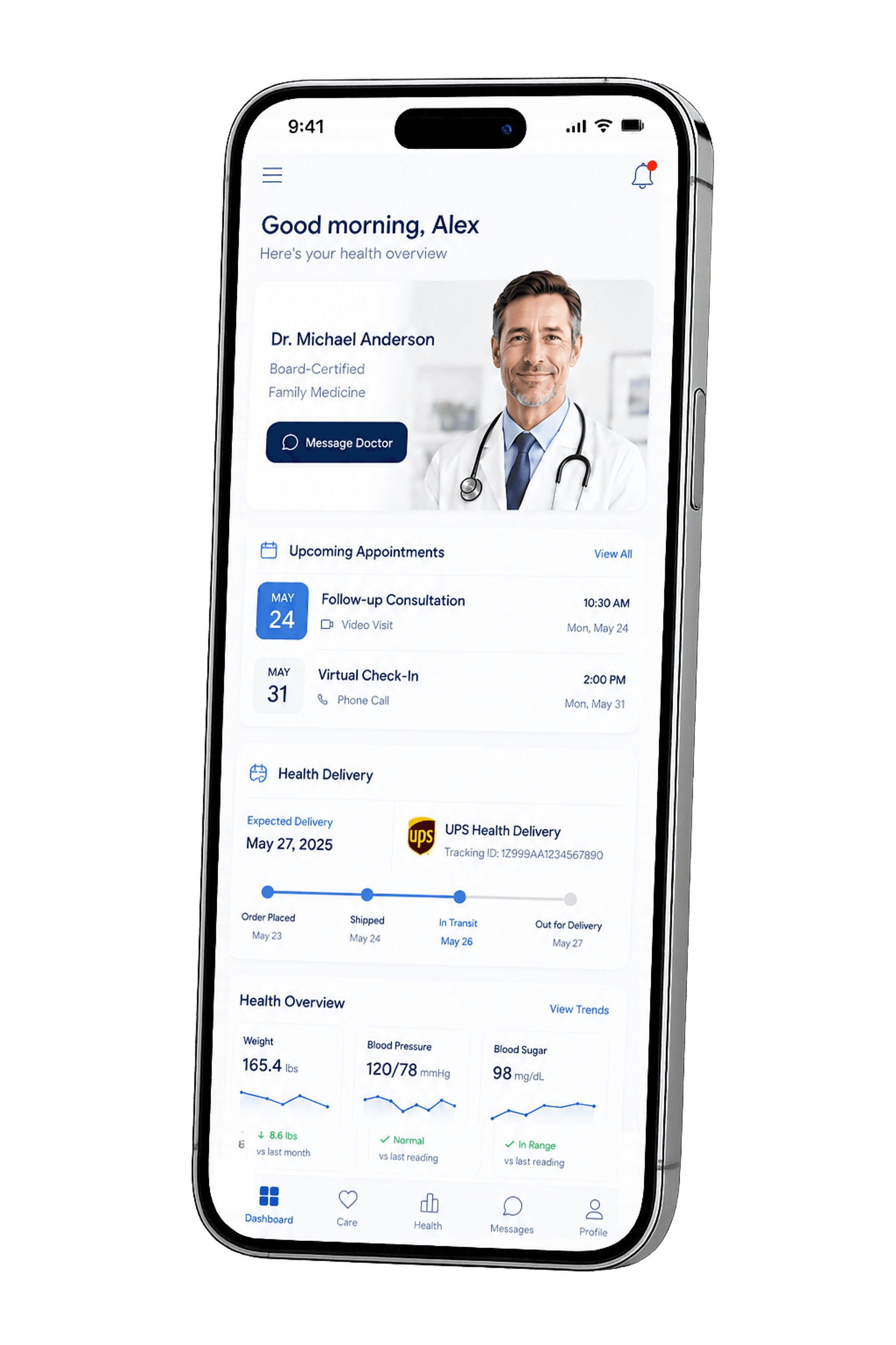
COMING SOON
The PepMed mobile app.
Access consultations, health insights and more - all from your phone.


Stay tuned for launch updates.
PepTalk Updates
New articles, platform news and launch announcements


Virtual Care
Connect with licensed providers from wherever you are.

Treatment Access
Treatment options prescribed by licensed healthcare providers.

See Your Progress
Appointments, delivery tracking and health trends in one place.
© 2026 PepMed. All rights reserved
Access. Trust. Convenience.
A new era of Physician guided care.
_________
PepMed connects you with licensed physicians and personalized care - anytime, anywhere.
COMING SOON
The PepMed mobile app.
Access consultations, health insights and more - all from your phone.
PepTalk Updates
New articles, platform news and launch announcements
Virtual Care
Connect with licensed providers from wherever you are.
Treatment Access
Treatment options prescribed by licensed healthcare providers.
See Your Progress
Appointments, delivery tracking and health trends in one place.
© 2026 PepMed. All rights reserved