
Never Miss an Update
Subscribe to PepTalk and get the latest FDA updates, research highlights, and industry news delivered straight to your inbox.
Never Miss an Update
Subscribe to PepTalk and get the latest FDA updates, research highlights, and industry news delivered straight to your inbox.
Never Miss an Update
PepMed
•
GLP-1 Muscle Loss: What Happens to Muscle When You Lose Weight?
GLP-1 Muscle Loss: What Happens to Muscle When You Lose Weight?
GLP-1 medications can produce significant weight loss—but not every pound lost is fat. Here’s what the latest research shows about lean mass, muscle and how to preserve it.
GLP-1 medications can produce significant weight loss—but not every pound lost is fat. Here’s what the latest research shows about lean mass, muscle and how to preserve it.

By PepMed Editorial Team
By PepMed Editorial Team
PepMed Updates
PepMed Updates


Important Takeaway
Some lean mass loss is expected during significant weight loss, whether it comes from GLP-1 medications or lifestyle changes. Current evidence suggests resistance training may help preserve lean mass while losing weight.
Some lean mass loss is expected during significant weight loss, whether it comes from GLP-1 medications or lifestyle changes. Current evidence suggests resistance training may help preserve lean mass while losing weight.
Some lean mass loss is expected during significant weight loss, whether it comes from GLP-1 medications or lifestyle changes. Current evidence suggests resistance training may help preserve lean mass while losing weight.
GLP-1 Muscle Loss: What Happens to Muscle When You Lose Weight?
GLP-1 medications such as semaglutide—and dual GIP/GLP-1 medications such as tirzepatide—can produce substantial weight loss. But when the number on the scale goes down, not all of that weight is body fat.
Some lean mass is typically lost too.
That has led to growing concern about “GLP-1 muscle loss.” But the research tells a more nuanced story: lean-mass loss occurs during significant weight loss in general, and lean mass isn't the same thing as muscle.
So what do the numbers actually show?
How Much Lean Mass Is Lost on GLP-1 Medications?
A 2026 meta-analysis examined 20 randomized controlled trials involving 15,782 participants and compared body-composition changes from incretin medications with lifestyle-based weight loss.
Researchers estimated the proportion of total weight loss attributable to lean mass at:
35.2% with semaglutide
25.4% with tirzepatide
26.8% with liraglutide
For comparison, lifestyle interventions without these medications came in at 26.2%.
That comparison is important.
It suggests that losing lean mass isn't simply a side effect unique to GLP-1 therapy. Some lean-mass loss commonly accompanies substantial overall weight loss. The amount can vary considerably between individuals, treatments and studies.
What Did the Tirzepatide Trial Find?
The SURMOUNT-1 body-composition substudy provides a particularly useful example.
Researchers used DXA scans to follow 160 participants with overweight or obesity. After 72 weeks, participants receiving tirzepatide experienced average reductions of:
21.3% in body weight
33.9% in fat mass
10.9% in lean mass
When researchers looked at the composition of the weight that was lost, approximately 75% was fat mass and 25% was lean mass.
Interestingly, the placebo group showed approximately the same proportional 75/25 split, despite losing substantially less total weight.
That helps put the muscle-loss conversation into perspective.
Does Lean Mass Mean Muscle?
Not exactly—and this distinction matters.
Lean mass is not a direct measurement of skeletal muscle.
Lean body mass includes skeletal muscle, but it also includes organs, body water and other non-fat tissues. DXA and other body-composition methods therefore cannot simply translate every pound of lost lean mass into a pound of lost muscle.
This is one reason headlines claiming that a specific percentage of GLP-1 weight loss is “muscle” can be misleading.
Researchers are increasingly interested not only in how much lean tissue someone has, but also in muscle strength, physical function and muscle quality.
Can You Preserve Lean Mass While Losing Weight?
This is where another number becomes particularly interesting.
In the 2026 meta-analysis, lifestyle-based weight-loss interventions without resistance training were associated with 26.2% of weight loss coming from lean mass.
When resistance training was incorporated, that proportion was 17.5%.
That doesn't prove everyone taking a GLP-1 will achieve the same result by lifting weights—the comparison was across different trials rather than a direct randomized GLP-1 exercise comparison.
But it reinforces a broader principle: resistance exercise can be an important part of preserving muscle during weight loss.
Why Does Muscle Matter During Weight Loss?
The goal of weight management isn't simply to make the number on the scale smaller.
Skeletal muscle contributes to strength, mobility, physical function and metabolic health. Preserving it becomes particularly important during substantial weight loss and as we age.
That's why a more complete weight-management strategy may consider nutrition, resistance exercise, activity, strength and body composition alongside body weight.
And the scale alone can't tell you whether the weight you've lost came primarily from fat or lean tissue.
Should You Worry About Muscle Loss on a GLP-1?
The evidence doesn't support the simple claim that GLP-1 medications uniquely “eat away muscle.”
A September 2026 systematic review and meta-analysis found reductions in lean/fat-free mass with GLP-1 receptor agonists, but the authors rated the certainty of that evidence as low and said the changes appeared largely related to weight loss.
At the same time, lean-mass preservation deserves attention—particularly when weight loss is substantial.
Instead of focusing exclusively on “How much weight did I lose?”, it may be more useful to also ask:
What kind of weight am I losing—and what am I doing to preserve strength and muscle along the way?
That's a much better definition of successful weight loss.
Medical Disclaimer: This content is provided for educational and informational purposes only and does not constitute medical advice, diagnosis, or treatment. Reading this content does not establish a provider-patient relationship with PepMed. Always consult a qualified healthcare professional regarding your individual health and treatment decisions. [Read our full Medical Disclaimer]
Medical Disclaimer: This content is provided for educational and informational purposes only and does not constitute medical advice, diagnosis, or treatment. Reading this content does not establish a provider-patient relationship with PepMed. Always consult a qualified healthcare professional regarding your individual health and treatment decisions. [Read our full Medical Disclaimer]

Access. Trust. Convenience.
A new era of Physician guided care.
_________
PepMed connects you with licensed physicians and personalized care - anytime, anywhere.




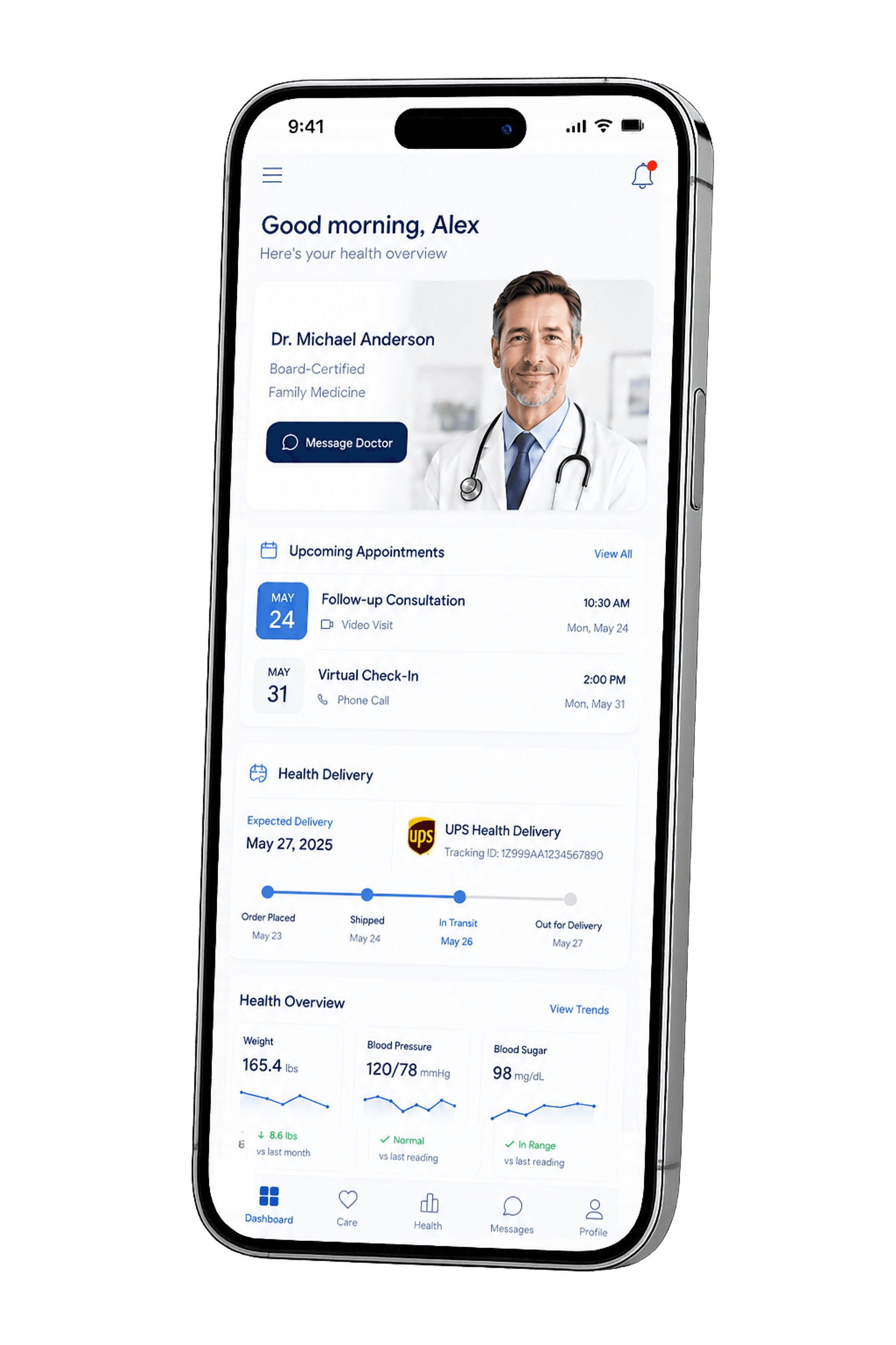
COMING SOON
The PepMed mobile app.
Access consultations, health insights and more - all from your phone.


Stay tuned for launch updates.
PepTalk Updates
New articles, platform news and launch announcements


Virtual Care
Connect with licensed providers from wherever you are.

Treatment Access
Treatment options prescribed by licensed healthcare providers.

See Your Progress
Appointments, delivery tracking and health trends in one place.
© 2026 PepMed. All rights reserved
Access. Trust. Convenience.
A new era of Physician guided care.
_________
PepMed connects you with licensed physicians and personalized care - anytime, anywhere.
COMING SOON
The PepMed mobile app.
Access consultations, health insights and more - all from your phone.
PepTalk Updates
New articles, platform news and launch announcements
Virtual Care
Connect with licensed providers from wherever you are.
Treatment Access
Treatment options prescribed by licensed healthcare providers.
See Your Progress
Appointments, delivery tracking and health trends in one place.
© 2026 PepMed. All rights reserved