
Never Miss an Update
Subscribe to PepTalk and get the latest FDA updates, research highlights, and industry news delivered straight to your inbox.
Never Miss an Update
Subscribe to PepTalk and get the latest FDA updates, research highlights, and industry news delivered straight to your inbox.
Never Miss an Update
RESEARCH
•
What Is Metabolic Health? 7 Numbers Worth Knowing
What Is Metabolic Health? 7 Numbers Worth Knowing
Metabolic health is about much more than weight. Learn seven measurements that can help reveal what's happening with your blood sugar, heart health and metabolism.
Metabolic health is about much more than weight. Learn seven measurements that can help reveal what's happening with your blood sugar, heart health and metabolism.

By PepMed Editorial Team
By PepMed Editorial Team
PepMed Updates
PepMed Updates


Important Takeaway
No single number defines metabolic health. Blood pressure, blood sugar, blood fats, waist circumference and activity trends can provide a much clearer picture when considered together.
No single number defines metabolic health. Blood pressure, blood sugar, blood fats, waist circumference and activity trends can provide a much clearer picture when considered together.
No single number defines metabolic health. Blood pressure, blood sugar, blood fats, waist circumference and activity trends can provide a much clearer picture when considered together.
You can feel healthy and still have changes happening beneath the surface.
Blood pressure may be creeping upward. Blood sugar may be gradually increasing. Triglycerides can rise without causing obvious symptoms.
That's why metabolic health isn't defined by your weight—or by how you look.
It describes how effectively your body handles processes such as blood sugar regulation, blood pressure, energy storage and blood fats. Several simple measurements can help provide a much clearer picture.
Here are seven worth understanding.
1. Waist Circumference
The number on the scale doesn't tell you where body fat is stored.
Fat concentrated around the abdomen is particularly associated with metabolic and cardiovascular risk. Waist circumference is therefore one of the five measurements used when evaluating metabolic syndrome.
The American Heart Association uses waist measurements above 40 inches for men and 35 inches for women as one metabolic-syndrome risk factor, although appropriate interpretation can vary among individuals and populations.
The point isn't to chase a particular waist size. It's that body composition and fat distribution can provide information that weight alone cannot.
2. Blood Pressure
High blood pressure often produces no obvious symptoms, yet it can place additional strain on the heart and blood vessels over time.
For metabolic syndrome specifically, a blood pressure of 130/85 mm Hg or higher, or taking medication for high blood pressure, counts as one of the five diagnostic factors.
A single unusual reading doesn't necessarily tell the whole story. Looking at properly measured readings over time is generally much more useful.
3. Fasting Blood Glucose
Glucose is one of the body's primary energy sources, and insulin helps move glucose from the bloodstream into cells.
When that system becomes less effective, fasting glucose can begin to rise.
The CDC classifies fasting blood glucose as:
Normal: 99 mg/dL or below
Prediabetes: 100–125 mg/dL
Diabetes: 126 mg/dL or above
A diagnosis shouldn't be made from an isolated number without appropriate clinical evaluation and, when needed, confirmation.
4. A1C
Fasting glucose is essentially a snapshot. A1C gives you a longer view.
The test estimates average blood glucose over roughly the previous 2–3 months.
CDC diagnostic ranges are:
Normal: below 5.7%
Prediabetes: 5.7–6.4%
Diabetes: 6.5% or higher.
A1C isn't perfect. Certain blood disorders, anemia, kidney or liver disease, pregnancy, blood loss and other factors can affect its accuracy, which is another reason laboratory results need context.
5. Triglycerides
Triglycerides are a type of fat found in your blood.
They provide energy, but elevated levels can also be part of a broader pattern of metabolic dysfunction.
For metabolic syndrome, 150 mg/dL or higher, or treatment for elevated triglycerides, counts as a risk factor.
Rather than looking at triglycerides in isolation, clinicians can interpret them alongside cholesterol, glucose, blood pressure and other aspects of your health.
6. HDL Cholesterol
HDL is commonly called “good” cholesterol because of its role in transporting cholesterol through the body.
For metabolic syndrome, low HDL is defined as below 40 mg/dL in men or 50 mg/dL in women, or receiving medication for low HDL.
Again, one cholesterol number doesn't define cardiovascular health. Your overall lipid profile and other risk factors matter too.
7. Your Activity and Fitness
This one isn't part of the five-number definition of metabolic syndrome, but it belongs in the bigger metabolic-health conversation.
Physical inactivity is associated with metabolic syndrome, while regular physical activity can help improve several metabolic risk factors.
And unlike most laboratory measurements, activity is something modern wearables can help you observe continuously.
Steps, workouts, heart rate, sleep and recovery trends can provide additional context about your lifestyle—but wearable metrics shouldn't be treated as diagnoses or replacements for clinical testing.
So, What Is “Good” Metabolic Health?
There isn't one magic number.
That's arguably the most important point.
Someone can have a healthy-looking body weight and still have elevated glucose or blood pressure. Another person may have one measurement outside an ideal range while their overall metabolic picture looks very different.
Clinicians therefore look for patterns.
One established example is metabolic syndrome. The American Heart Association defines it as having at least three of five factors: increased waist circumference, high triglycerides, low HDL cholesterol, elevated blood pressure and elevated fasting glucose. Having several together is associated with greater risk of cardiovascular disease and diabetes.
Can You Improve Your Metabolic Health?
Often, yes.
Physical activity, nutrition, weight management where appropriate, sleep and addressing individual risk factors can all play a role.
The American Heart Association recommends at least 150 minutes of moderate-intensity physical activity each week as part of managing metabolic syndrome, alongside a heart-healthy dietary pattern and appropriate medical treatment when needed.
The goal doesn't have to be perfection.
It's to understand where you are now, what is changing over time and which factors are actually worth addressing.
The Takeaway
Metabolic health is much bigger than the number on a scale.
Waist circumference, blood pressure, fasting glucose, A1C, triglycerides, HDL cholesterol and activity/fitness can each reveal a different piece of the picture.
No single measurement tells you whether you're “healthy.”
But when laboratory results, physical measurements, lifestyle information and longer-term trends are considered together, they can provide a much more useful view of what's happening inside your body.
Medical Disclaimer: This content is provided for educational and informational purposes only and does not constitute medical advice, diagnosis, or treatment. Reading this content does not establish a provider-patient relationship with PepMed. Always consult a qualified healthcare professional regarding your individual health and treatment decisions. [Read our full Medical Disclaimer]
Medical Disclaimer: This content is provided for educational and informational purposes only and does not constitute medical advice, diagnosis, or treatment. Reading this content does not establish a provider-patient relationship with PepMed. Always consult a qualified healthcare professional regarding your individual health and treatment decisions. [Read our full Medical Disclaimer]

Access. Trust. Convenience.
A new era of Physician guided care.
_________
PepMed connects you with licensed physicians and personalized care - anytime, anywhere.




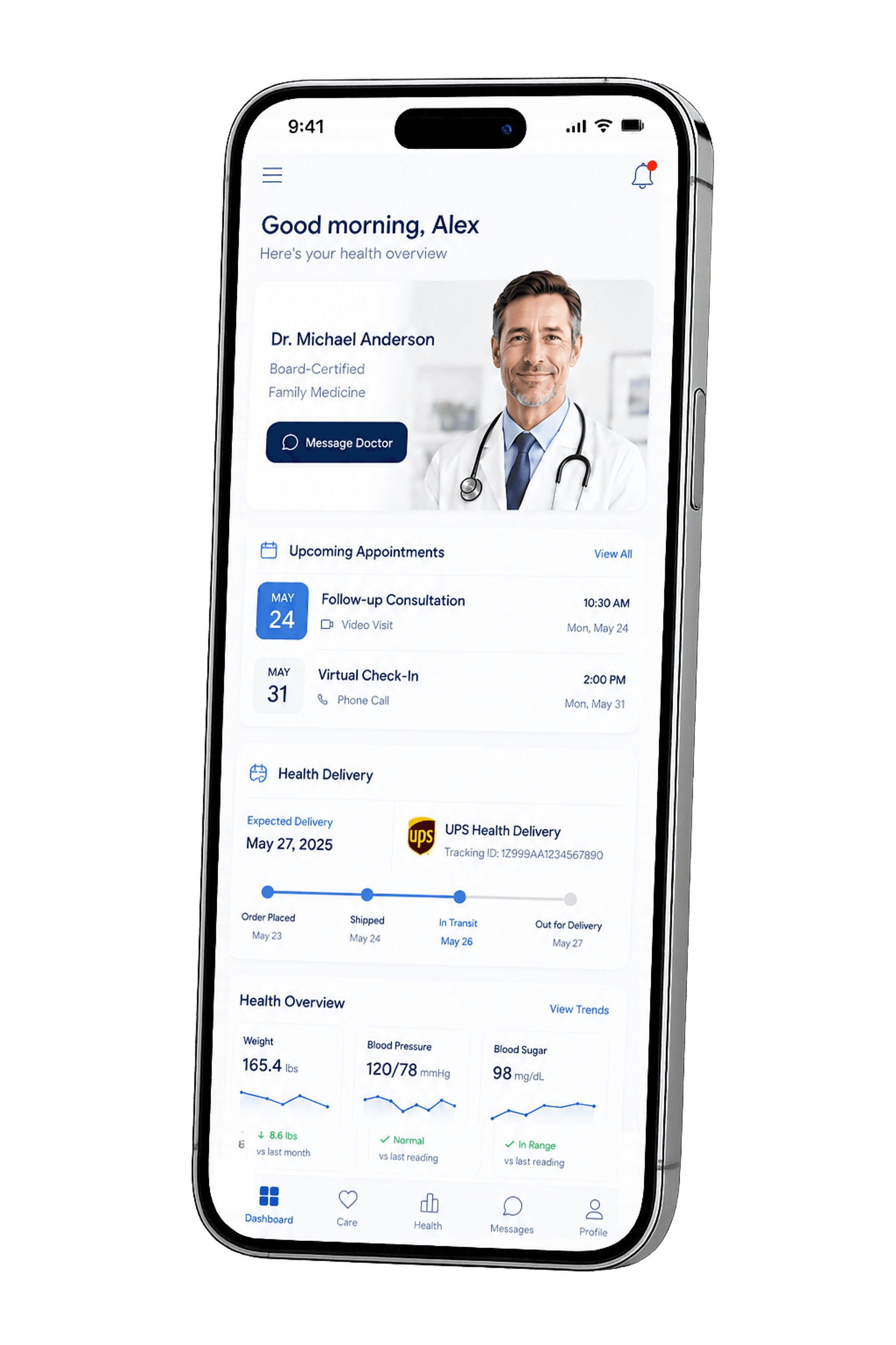
COMING SOON
The PepMed mobile app.
Access consultations, health insights and more - all from your phone.


Stay tuned for launch updates.
PepTalk Updates
New articles, platform news and launch announcements


Virtual Care
Connect with licensed providers from wherever you are.

Treatment Access
Treatment options prescribed by licensed healthcare providers.

See Your Progress
Appointments, delivery tracking and health trends in one place.
© 2026 PepMed. All rights reserved
Access. Trust. Convenience.
A new era of Physician guided care.
_________
PepMed connects you with licensed physicians and personalized care - anytime, anywhere.
COMING SOON
The PepMed mobile app.
Access consultations, health insights and more - all from your phone.
PepTalk Updates
New articles, platform news and launch announcements
Virtual Care
Connect with licensed providers from wherever you are.
Treatment Access
Treatment options prescribed by licensed healthcare providers.
See Your Progress
Appointments, delivery tracking and health trends in one place.
© 2026 PepMed. All rights reserved