
Never Miss an Update
Subscribe to PepTalk and get the latest FDA updates, research highlights, and industry news delivered straight to your inbox.
Never Miss an Update
Subscribe to PepTalk and get the latest FDA updates, research highlights, and industry news delivered straight to your inbox.
Never Miss an Update
RESEARCH
•
Peptides for Weight Loss: What Actually Counts as a Weight-Loss Peptide?
Peptides for Weight Loss: What Actually Counts as a Weight-Loss Peptide?
Not everything marketed as a “weight-loss peptide” has the same evidence. Learn how FDA-approved medications, investigational drugs and experimental peptides differ.
Not everything marketed as a “weight-loss peptide” has the same evidence. Learn how FDA-approved medications, investigational drugs and experimental peptides differ.

By PepMed Editorial Team
By PepMed Editorial Team
PepMed Updates
PepMed Updates


Important Takeaway
Being a peptide doesn't make something a proven weight-loss treatment. Semaglutide and tirzepatide have FDA-approved weight-management indications, retatrutide remains investigational, and many other peptides promoted for fat loss have far less human evidence.
Being a peptide doesn't make something a proven weight-loss treatment. Semaglutide and tirzepatide have FDA-approved weight-management indications, retatrutide remains investigational, and many other peptides promoted for fat loss have far less human evidence.
Being a peptide doesn't make something a proven weight-loss treatment. Semaglutide and tirzepatide have FDA-approved weight-management indications, retatrutide remains investigational, and many other peptides promoted for fat loss have far less human evidence.
Search for “peptides for weight loss” and you’ll find a long list of names.
Semaglutide. Tirzepatide. Retatrutide. MOTS-C. CJC-1295. Ipamorelin. AOD-9604.
They’re often grouped together under the same label: weight-loss peptides.
But that can be misleading.
A peptide is simply a chain of amino acids. Peptides can perform many different functions in the body, and being a peptide does not automatically mean something has been proven to help people lose weight.
So what actually counts as a weight-loss peptide?
What is a weight-loss peptide?
There isn't one official medical category called “weight-loss peptides.”
When people use the phrase, they may be talking about very different substances—from FDA-approved medications with large human clinical trials behind them to experimental compounds with little human evidence.
A more useful question is:
Has this specific peptide-based medication actually been shown to produce weight loss in humans, and is it FDA-approved for weight management?
That distinction changes the picture considerably.
Which peptide medications are FDA-approved for weight loss?
Two of the most recognizable examples are semaglutide and tirzepatide.
Semaglutide
Semaglutide is a GLP-1 receptor agonist. It mimics the activity of the naturally occurring GLP-1 hormone, which plays roles in appetite, digestion and blood-sugar regulation.
Semaglutide is the active ingredient in Wegovy, which is FDA-approved for chronic weight management in appropriate patients. In March 2026, the FDA also approved a higher-dose Wegovy formulation for certain adults. U.S. Food and Drug Administration
Tirzepatide
Tirzepatide acts on two hormone receptors: GIP and GLP-1.
It is the active ingredient in Zepbound, which the FDA approved for chronic weight management in adults with obesity or overweight plus at least one weight-related condition. U.S. Food and Drug Administration
These aren't simply substances that have become popular in wellness clinics.
They are medications evaluated in large clinical trials and approved for specific medical uses.
What about retatrutide?
Retatrutide is where things become especially interesting.
Unlike semaglutide and tirzepatide, retatrutide activates three receptors: GIP, GLP-1 and glucagon.
Phase 3 results announced in 2026 have shown substantial weight reduction. In Lilly's TRIUMPH-1 trial, participants receiving the 12 mg dose lost an average of 28.3% of their body weight at 80 weeks. Eli Lilly and Company
But there's an important distinction:
Retatrutide is still investigational.
Lilly reported in July 2026 that it had completed the clinical data package supporting planned global regulatory submissions and intends to submit retatrutide to the FDA in Q1 2027. Eli Lilly and Company
Promising clinical trial results are not the same thing as FDA approval.
Are MOTS-C, CJC-1295 and ipamorelin weight-loss peptides?
This is where the phrase “weight-loss peptide” becomes much less reliable.
Compounds such as MOTS-C, CJC-1295, ipamorelin and AOD-9604 are sometimes promoted online in connection with metabolism, body composition or fat loss.
That doesn't put them in the same category as FDA-approved weight-management medications.
For example, FDA reviewed MOTS-C in 2026 for proposed uses that included obesity, but that review occurred as part of the agency's evaluation of bulk substances for pharmacy compounding—not as an approval of MOTS-C as an obesity medication. U.S. Food and Drug Administration
FDA has also said it has not identified human exposure data for drug products containing MOTS-C and lacks important information needed to assess its safety in humans. U.S. Food and Drug Administration
Similarly, FDA describes available clinical data for CJC-1295 as limited and has raised potential safety concerns surrounding CJC-1295 and ipamorelin used in compounded drugs. U.S. Food and Drug Administration
Calling these substances “weight-loss peptides” can therefore imply a level of evidence that doesn't currently exist.
Does “fat-burning peptide” mean anything?
Not necessarily.
Terms such as “fat-burning peptide,” “metabolic peptide” and “weight-loss peptide” can be marketing descriptions rather than recognized medical classifications.
A compound might influence a biological pathway related to metabolism in laboratory or animal research without having been shown to safely produce meaningful weight loss in people.
That's why the evidence behind the individual compound matters much more than the label attached to it.
What should you look for when researching a weight-loss peptide?
Instead of asking whether something is marketed as a weight-loss peptide, ask:
Is it FDA-approved for weight management?
Have randomized human clinical trials demonstrated weight loss?
How many people have actually been studied?
Do we understand its side effects and contraindications?
Is it investigational rather than approved?
Is the claim based mainly on animal or laboratory research?
Those questions quickly separate established treatments from promising research and marketing hype.
Are compounded GLP-1 medications FDA-approved?
No.
A compounded medication is not itself FDA-approved, even when its active ingredient is also found in an FDA-approved medication.
FDA specifically notes that compounded GLP-1 drugs are not FDA-approved and therefore do not undergo the agency's premarket review for safety, effectiveness and quality. U.S. Food and Drug Administration
That distinction is particularly important when comparing products being marketed online.
So what actually counts as a weight-loss peptide?
The term covers too much to be useful on its own.
There are currently peptide-based medications with established human evidence and FDA-approved weight-management indications, such as semaglutide and tirzepatide.
There are also investigational peptide-based drugs, such as retatrutide, with substantial clinical research but no FDA approval yet.
And then there are experimental or less-studied peptides that may be discussed in relation to metabolism or body composition without established evidence that they are effective weight-loss treatments.
Those categories shouldn't be treated as interchangeable.
Medical Disclaimer: This content is provided for educational and informational purposes only and does not constitute medical advice, diagnosis, or treatment. Reading this content does not establish a provider-patient relationship with PepMed. Always consult a qualified healthcare professional regarding your individual health and treatment decisions. [Read our full Medical Disclaimer]
Medical Disclaimer: This content is provided for educational and informational purposes only and does not constitute medical advice, diagnosis, or treatment. Reading this content does not establish a provider-patient relationship with PepMed. Always consult a qualified healthcare professional regarding your individual health and treatment decisions. [Read our full Medical Disclaimer]

Access. Trust. Convenience.
A new era of Physician guided care.
_________
PepMed connects you with licensed physicians and personalized care - anytime, anywhere.




COMING SOON
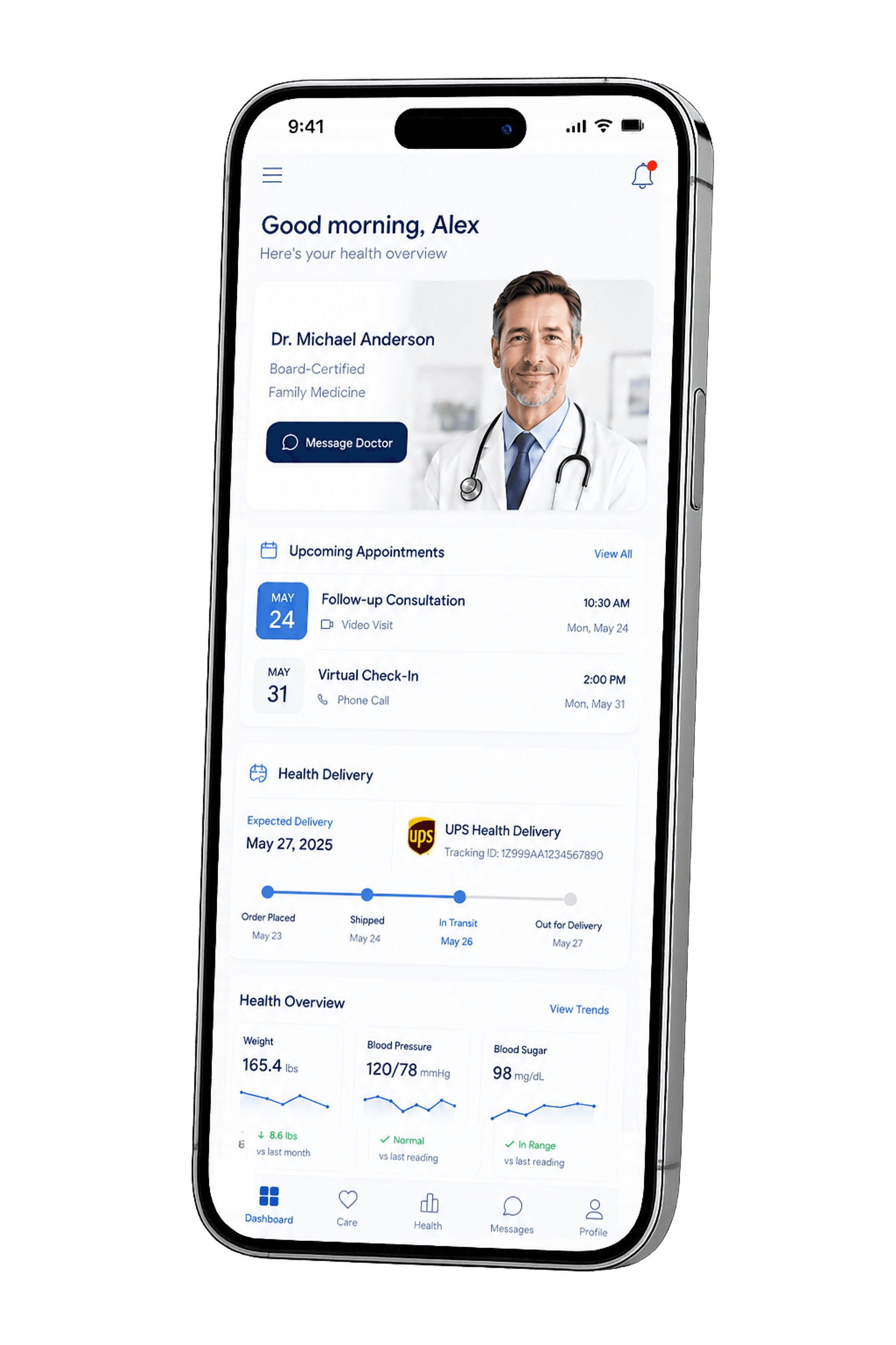
The PepMed mobile app.
Access consultations, health insights and more - all from your phone.


Stay tuned for launch updates.
PepTalk Updates
New articles, platform news and launch announcements


Virtual Care
Connect with licensed providers from wherever you are.

Treatment Access
Treatment options prescribed by licensed healthcare providers.

See Your Progress
Appointments, delivery tracking and health trends in one place.
© 2026 PepMed. All rights reserved
Access. Trust. Convenience.
A new era of Physician guided care.
_________
PepMed connects you with licensed physicians and personalized care - anytime, anywhere.
COMING SOON
The PepMed mobile app.
Access consultations, health insights and more - all from your phone.
PepTalk Updates
New articles, platform news and launch announcements
Virtual Care
Connect with licensed providers from wherever you are.
Treatment Access
Treatment options prescribed by licensed healthcare providers.
See Your Progress
Appointments, delivery tracking and health trends in one place.
© 2026 PepMed. All rights reserved