
Never Miss an Update
Subscribe to PepTalk and get the latest FDA updates, research highlights, and industry news delivered straight to your inbox.
Never Miss an Update
Subscribe to PepTalk and get the latest FDA updates, research highlights, and industry news delivered straight to your inbox.
Never Miss an Update
PepMed
•
What Is Low Testosterone? Symptoms, Testing & TRT Explained
What Is Low Testosterone? Symptoms, Testing & TRT Explained
Low testosterone can affect sexual health, energy, muscle, bone and more. Learn the symptoms, how low testosterone is diagnosed and what TRT actually does.
Low testosterone can affect sexual health, energy, muscle, bone and more. Learn the symptoms, how low testosterone is diagnosed and what TRT actually does.

By PepMed Editorial Team
By PepMed Editorial Team
PepMed Updates
PepMed Updates


Important Takeaway
Low testosterone isn't diagnosed from symptoms or a single blood test alone. Proper evaluation typically combines symptoms with consistently low testosterone levels confirmed through repeat morning testing.
Low testosterone isn't diagnosed from symptoms or a single blood test alone. Proper evaluation typically combines symptoms with consistently low testosterone levels confirmed through repeat morning testing.
Low testosterone isn't diagnosed from symptoms or a single blood test alone. Proper evaluation typically combines symptoms with consistently low testosterone levels confirmed through repeat morning testing.
Low energy. Reduced sex drive. Difficulty building muscle. Changes in mood or concentration.
These are all commonly associated with low testosterone—but having these symptoms doesn't necessarily mean your testosterone is low.
Testosterone levels naturally vary, and many symptoms associated with low testosterone can have other causes. That's why diagnosing testosterone deficiency involves more than simply ordering one blood test.
Here's what men should know about low testosterone and testosterone replacement therapy (TRT).
What Does Testosterone Do?
Testosterone is an androgen hormone produced primarily by the testicles and regulated through signals from the brain.
It plays an important role in sexual function, sperm production, muscle and bone health, red blood cell production and male physical characteristics.
Testosterone levels also vary throughout the day and generally peak in the morning, which is one reason the timing of testosterone testing matters.
What Are the Symptoms of Low Testosterone?
Symptoms can vary considerably between men.
Possible signs and symptoms include:
Reduced sex drive
Erectile difficulties
Reduced energy
Loss of muscle mass
Changes in body composition
Reduced body or facial hair
Difficulty concentrating
Mood changes
Reduced bone density
However, these symptoms aren't unique to testosterone deficiency.
Sleep problems, medications, obesity, illness and numerous other factors can produce similar symptoms. The Endocrine Society specifically cautions that symptoms alone aren't enough to diagnose hypogonadism.
How Is Low Testosterone Diagnosed?
This is where proper testing becomes important.
Current Endocrine Society guidance says a diagnosis should involve both symptoms consistent with testosterone deficiency and consistently low testosterone measurements.
The Society's July 2026 statement recommends at least two early-morning, fasting testosterone tests and notes that testosterone assays themselves can vary between laboratories.
If testosterone is consistently low, additional testing may help determine why.
For example, clinicians may evaluate hormones such as LH and FSH to help distinguish a problem originating in the testicles from one involving the pituitary or hypothalamus.
A number on a lab report therefore isn't the entire diagnosis.
What Is TRT?
TRT stands for testosterone replacement therapy.
It involves administering testosterone to increase testosterone levels in appropriately selected patients with testosterone deficiency.
FDA-approved testosterone is available in several forms, including injections, topical gels, transdermal patches and buccal formulations.
Different formulations can produce different dosing patterns, convenience considerations and potential side effects, so treatment should be individualized.
What Can TRT Help With?
For appropriately diagnosed men, testosterone therapy may improve certain symptoms associated with testosterone deficiency.
But TRT shouldn't be viewed as a general solution for fatigue, aging, muscle building or reduced motivation.
The underlying cause of symptoms matters, as does whether testosterone is actually low.
Interestingly, testosterone regulation is currently evolving. In April 2026, FDA encouraged manufacturers to pursue evidence for a potential new indication involving low libido in men with idiopathic hypogonadism. FDA emphasized that this was not itself a new approval and that substantial evidence would still be required.
Does TRT Affect Fertility?
Yes—this is particularly important for younger men.
Taking testosterone from outside the body can suppress the hormonal signals involved in the body's own testosterone and sperm production.
For this reason, the Endocrine Society recommends against beginning testosterone therapy in men who are planning fertility in the near term.
Men interested in having children should discuss fertility before starting TRT.
Is Testosterone Bad for Your Heart?
The evidence here has evolved.
The large TRAVERSE cardiovascular safety trial followed more than 5,200 men. Major cardiovascular events occurred in 7.0% of participants receiving testosterone gel compared with 7.3% receiving placebo. FDA concluded that the trial did not demonstrate a new cardiovascular safety signal.
This contributed to FDA removing previous boxed-warning language concerning increased cardiovascular risk.
However, separate studies found that testosterone products can increase blood pressure, resulting in FDA requiring corresponding labeling changes.
So “TRT is dangerous for your heart” and “TRT has no cardiovascular risks” are both oversimplifications.
What Needs to Be Monitored During TRT?
Starting TRT isn't the end of the process.
Patients generally require follow-up to evaluate testosterone levels, symptom response and potential adverse effects.
Depending on the individual, monitoring may include blood counts/hematocrit, blood pressure and appropriate prostate-related evaluation. The Endocrine Society continues to emphasize screening and ongoing monitoring when testosterone therapy is initiated.
The goal isn't simply to make a testosterone number as high as possible. Treatment should be based on the patient's diagnosis, symptoms, response and safety.
The Takeaway
Low testosterone is a genuine medical condition, but symptoms such as fatigue, low libido and reduced muscle mass don't automatically mean someone has low T.
Proper evaluation starts by understanding the symptoms and confirming consistently low testosterone through appropriate testing.
For men who are suitable candidates, TRT can be an important treatment—but fertility, blood pressure, underlying causes and ongoing monitoring all need to be part of the conversation.
As testosterone research and FDA guidance continue to evolve, individualized medical evaluation remains more useful than chasing a particular testosterone number.
Medical Disclaimer: This content is provided for educational and informational purposes only and does not constitute medical advice, diagnosis, or treatment. Reading this content does not establish a provider-patient relationship with PepMed. Always consult a qualified healthcare professional regarding your individual health and treatment decisions. [Read our full Medical Disclaimer]
Medical Disclaimer: This content is provided for educational and informational purposes only and does not constitute medical advice, diagnosis, or treatment. Reading this content does not establish a provider-patient relationship with PepMed. Always consult a qualified healthcare professional regarding your individual health and treatment decisions. [Read our full Medical Disclaimer]

Access. Trust. Convenience.
A new era of Physician guided care.
_________
PepMed connects you with licensed physicians and personalized care - anytime, anywhere.




COMING SOON
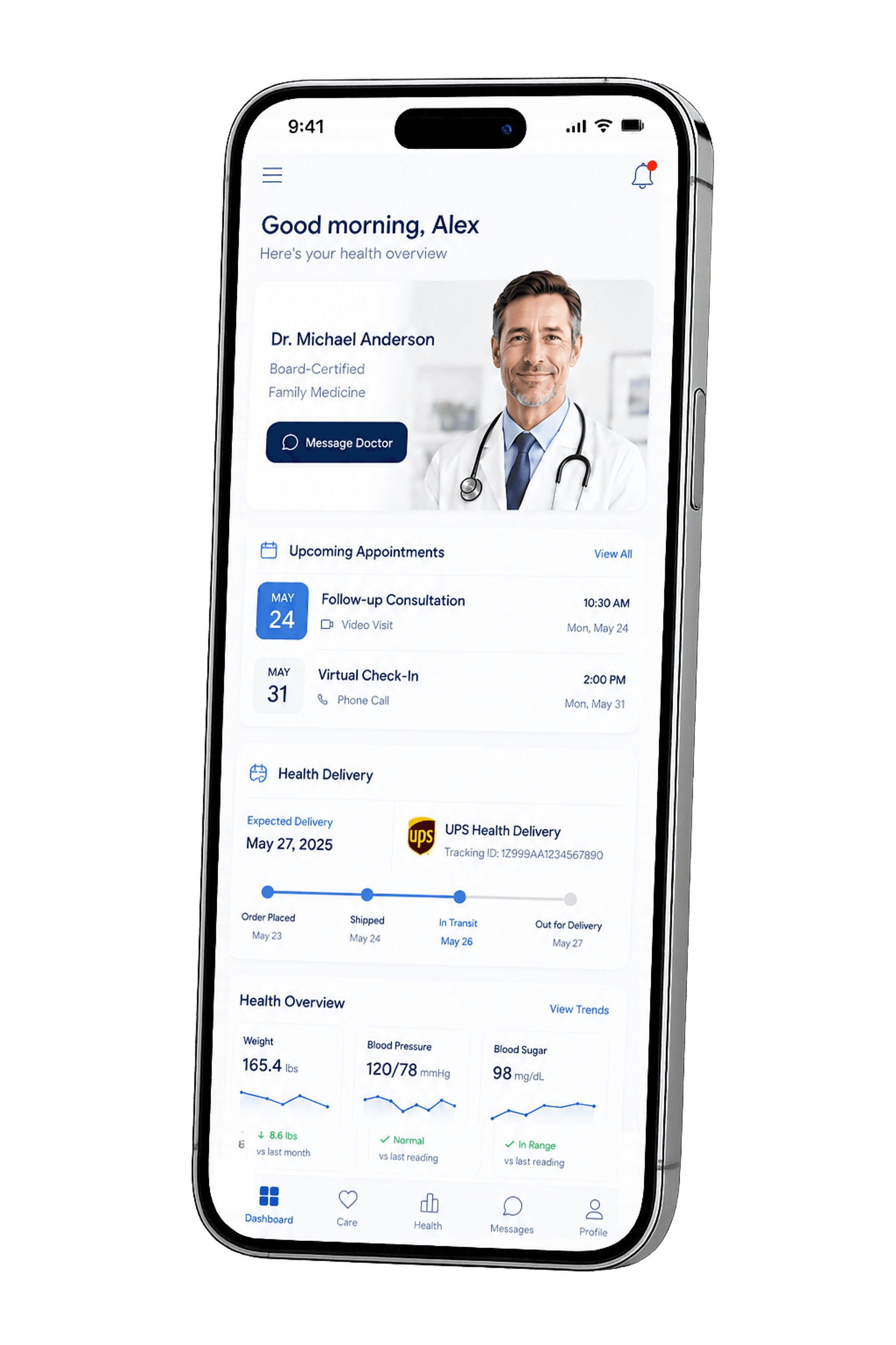
The PepMed mobile app.
Access consultations, health insights and more - all from your phone.


Stay tuned for launch updates.
PepTalk Updates
New articles, platform news and launch announcements


Virtual Care
Connect with licensed providers from wherever you are.

Treatment Access
Treatment options prescribed by licensed healthcare providers.

See Your Progress
Appointments, delivery tracking and health trends in one place.
© 2026 PepMed. All rights reserved
Access. Trust. Convenience.
A new era of Physician guided care.
_________
PepMed connects you with licensed physicians and personalized care - anytime, anywhere.
COMING SOON
The PepMed mobile app.
Access consultations, health insights and more - all from your phone.
PepTalk Updates
New articles, platform news and launch announcements
Virtual Care
Connect with licensed providers from wherever you are.
Treatment Access
Treatment options prescribed by licensed healthcare providers.
See Your Progress
Appointments, delivery tracking and health trends in one place.
© 2026 PepMed. All rights reserved